

The decline in Web3 games’ popularity begins with a simple observation: players were getting bored. Not with games in general, because people will always love games, but with Web3 games that promise financial gain but don’t deliver fun. Most early play-to-earn games were more like single-story games with a linear plot than adventures.
If you’ve been keeping an eye on Web3 gaming over the past two years, you’ve probably seen the trend lines. Daily active on-chain players in the wider P2E space dropped to under 1 million globally by mid-2023, a sharp fall from the hype wave of 2021. Token-dependent economies collapsed when the incentives dried up, leaving players with assets nobody wanted and worlds nobody visited.
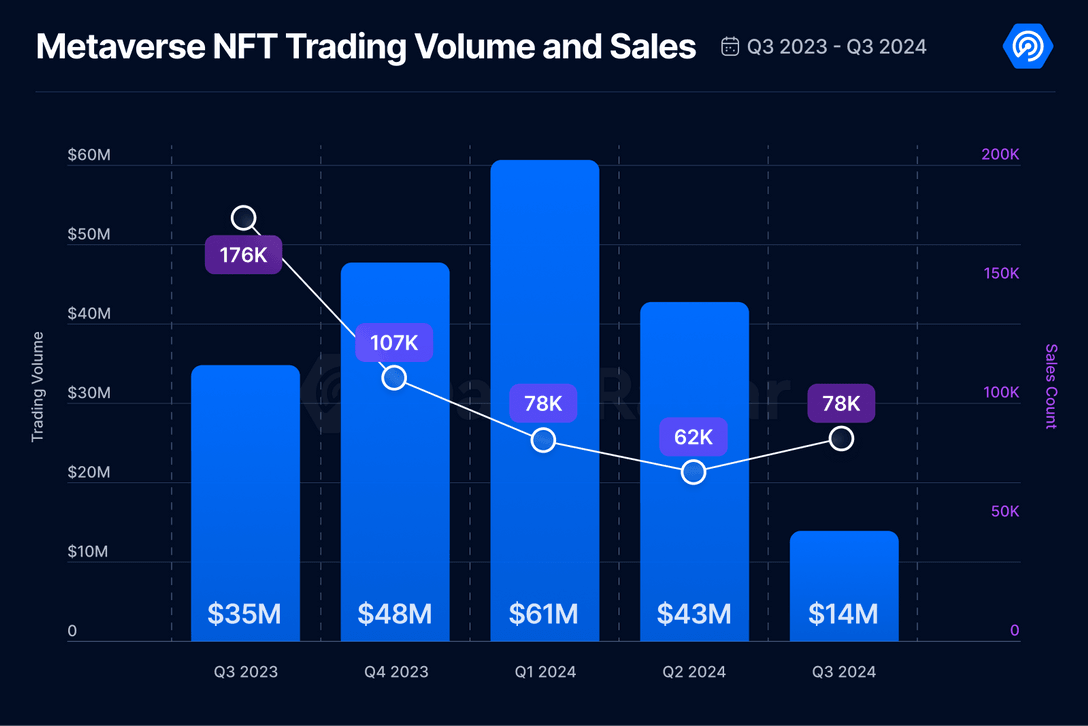
In Q3 2024, trading volume for metaverse-based NFT collections was $14 million, with around 78,000 pieces sold. This represents a 67% drop in volume but a notable 26% increase in sales, indicating that demand remains strong despite price declines.
Today, many Web3 players are looking for the right game that combines real-world value, in-game ownership, a strong, dedicated community, and fun. That game on the market is Chainers. Using an innovative skill-based gaming ecosystem that offers ownership, control, and unlimited creativity. Let’s explore the game in more detail.
What is Chainers?
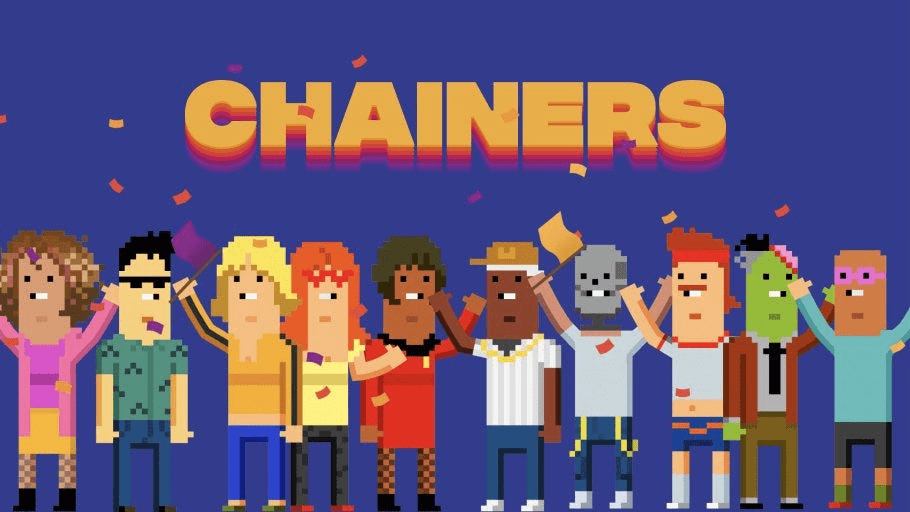
Chainers is a multi-genre online game that doesn’t lock you into a single style of play. One day you’re crafting, another day you’re trading, and later you’re experimenting with character builds and fighting. This is a new-generation MMO that pulls you into a rich narrative, tackles missions, and shapes your own adventure in a living virtual world.
The game is free-to-play at the entry level, while offering the depth and progression that players expect from long-term digital worlds.
The numbers speak for themselves:

Over 500,000 signups have already been recorded by Chainers.io, with more than 400k daily transactions. The community is talking, crafting, sharing, experimenting, and earning real money while building.
Why are They Worth your Attention?
Why is Chainers exactly interesting right now? Instead of chasing speculative token pumps, the game has been built with skill-based Web3 game mechanics. Rewards favor creativity, strategy, and consistency.
There’s also the UGC-driven economy, which is something that many older Web3 titles promised but never quite executed. In Chainers, players create and customize assets that actually matter in the ecosystem, feeding both gameplay and marketplace activity. This positions the platform as a living sandbox.
With much of the Web3 gaming field struggling, Chainers has stepped into the gap with momentum and a player-first philosophy. When half a million people sign up for something at a time when others are shutting servers down, it suggests that players are craving exactly this shift.
Chainers x Immutable Partnership: Why It Matters
If you’ve been around Web3 gaming for a while, you know the technical side often kills the fun. As per the Blockchain Game Alliance State of Industry Report, 53.9% of respondents say onboarding challenges are still the industry’s biggest challenge. Slow transactions, clunky wallets, and gas fees that sometimes cost more than the item you’re trying to buy are enough to make any newcomer bounce.
That’s where the partnership with Immutable comes in. Immutable has quietly built one of the most respected infrastructures for blockchain gaming.
Absolutely gas-free
Their roll-up technology makes transactions basically gas-free for players, which is a big deal. It means when you’re swapping an in-game item or crafting something new, you don’t get hit with a surprise $15 transaction fee.
Instant gameplay and one-click onboarding
A new player doesn’t need to stumble through wallet setups. You can be inside the game in seconds, thanks to Immutable Passport.
Cross-game potential
By integrating with Immutable’s wider ecosystem, Chainers assets aren’t confined to a single platform. Your progress, identity, and crafted items have the potential to travel, expanding the idea of permanence in digital worlds. It suggests that your time investment in Chainers could hold value far beyond its borders.
The Immutable deal with Chainers it’s a technical backbone that gives credibility with gamers and investors.
Gameplay and Skill-Based Rewards
Chainers Universe is a free-to-play world. You begin with a plot of land and the freedom to experiment. Assets you craft have unique traits and rarities that directly affect their in-game value. The value of each asset is determined by its rarity. The hierarchy starts from common and ends with legendary rarity.
The clever part is how rewards work. Each item contributes to your ‘biopoints,’ which determine your share of seasonal rewards. But rarity isn’t everything; timing, strategy, and creativity matter, too.
For example, the seasonal cycle introduces new animals and crops at different times of the year. A skilled player might anticipate market demand or pair the right breeds for better yields. Consistency in farming and clever resource management feed into outcomes.
Players can upgrade with machinery, install phytolamp systems, or automate certain tasks. Each decision layers onto your long-term progression. Your rewards rise as your strategies improve, because the outcome isn’t locked behind a paywall.
Players who want to lean into creativity also benefit from the UGC-driven economy. Design something unique, and it can become part of the marketplace, circulating among others. The world constantly grows the more people engage.
Economy and Tokenomics
Most play-to-earn titles fell into the same trap: inflate the token supply, create endless rewards, and then wonder why everything collapsed under sell pressure. Chainers doesn’t repeat this mistake.
The in-game economy is designed around actual engagement. Players earn rewards through farming, crafting, and seasonal events. These rewards can be traded or kept, but they aren’t pumped into the system without purpose.
Chainers’ team has also hinted at a native ecosystem token (still in development, roadmap updates pending). But even without it, the reward system is tied to actions.
The way things are structured, players can buy in with fiat or crypto if they want to, but it’s not a requirement to advance. That balance creates an environment where casual players and heavy investors can coexist.
The Chainers Universe and Customization
Beyond mechanics and economics, there’s the universe itself. Lore is often overlooked in Web3 games, but Chainers actually gives players a sense of place. Each land, avatar, and crafted item feels like part of a broader story.
Avatars can be tweaked with traits, styles, and gear, each stored as an NFT. Because of the Immutable integration, these avatars and items are designed for longevity. They can carry forward, potentially into other titles and experiences. That promise of continuity is what Web3 gaming has been hinting at for years.
Who Is Chainers For?
Chainers appeals to several layers of the gaming crowd. Sandbox lovers who enjoy building and experimenting will find plenty of freedom here. Strategy fans who like optimizing systems will appreciate the farming cycles, the biopoints structure, and the market dynamics.
For Web3-curious players, it’s approachable. The free-to-play model removes the “you must buy first” barrier, and the Immutable Passport onboarding makes it nearly frictionless. For builders, creators, community-driven developers, and regular players, Chainers represents a constantly growing ecosystem where the player’s voice has weight.
If you’ve been waiting for a skill-based Web3 game that values creativity and strategy, this platform is likely to click.
Final Take
Chainers feels like one of the few projects actually building for longevity. It respects the player’s time, experiments with real ownership, and ties value back to skill and creativity.
The partnership with Immutable signals ambition beyond a single game. It hints at a connected universe where your identity and achievements are meaningful and permanent.
Can Chainers keep scaling this universe without losing the magic that makes it fun in the first place? Can it hold player-first values while expanding into a true metaverse layer?
The industry is watching, and so are the players.