There’s this quiet kind of magic that happens in vintage photos. The yellowed edges, the soft creases of age, the happy faces smiling perpetually in their happiness. And now, technology, and those moments so frozen in time can move again — not through fantasy, but through creativity. Pippit, an AI video generator, is doing just that, allowing any user to transform static family photos or historical photos into moving, breathing narratives.
It’s not animation — it’s resurrection. About hearing laughter wash over black-and-white portraits or watching the wind sweep through sepia fields of years gone by. With AI storytelling, memory is no longer history — it’s something we can see, touch, and relive again in motion.
When stillness remembers: the rebirth of old photographs
Every faded picture holds an unseen past — one we can sense, but cannot watch unfold. A grandfather’s glance captured halfway through smiling. A father’s grin in a graduation portrait. Friends together before life scattered them to the horizons of time. Up until now, they were stuck in stillness.
Thing is, in this new era of turning images into videos, those old pictures start to come alive. AI can handle little movements now, like eyes blinking, backgrounds shifting a bit, or a head turning just so. It makes these short clips that play out like some kind of time machine thing. You know, it pulls you right in.
Anyway, this tech lets you get a little closer to the people gone from your life, or the spots that really formed who you are. Memories shift into actual motion. Nostalgia turns into these stories you can watch.
Storytelling beyond words: when motion heals memory
For historians, archivists, and families too, animation is a bridge — from what was to what is. Imagine introducing your children to your great-grandparents smiling as if caught in a moment alive. Or viewing a historical figure not as a portrait, but as someone breathing softly through time.
This type of digital resurrection brings history alive from something we read about to something we relive. It also provides individuals with a method of healing — a means of emotionally connecting with those who previously had seemed out of reach.
With evocative imagery, memory is made concrete. It travels, glances back, and somehow, inexplicably — responds.
Archives reborn: saving heritage in motion
To archivists and museums, bringing the past to life is not spectacle — it’s conservation. Traditional archives chronicle events; AI-assisted storytelling helps explain them. A museum can bring to life portraits within a hundred-year-old collection, providing the viewer with a sense of expressions which once were behind still paint and grain.
These computer-generated animations can even be used to render abandoned settings — the glow of lamplight, the sweep of clouds across a ruined sky-line, or the radiance of early urban lights. With accompanying voiceover or period audio, they become multimedia experiences akin to strolling through time.
That’s where tools like Pippit are called for — not only for marketers and creators but for historians and families who want to give memory some pulse.
From frame to feeling: crafting living memories on Pippit
Let’s explore how you can convert your old images into powerful moving tales on Pippit’s image to video generation, where nostalgia converges with storytelling at the forefront.
Step 1: Insert your images
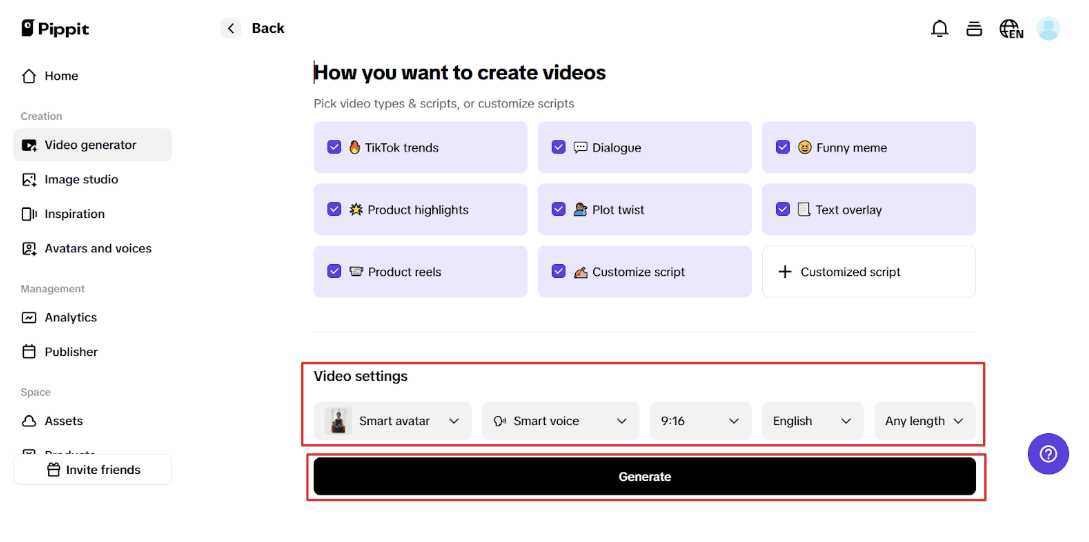
Sign up or sign in to Pippit and go into the media upload feature from the “Video generator” menu. Click “Add media” to upload pictures from your device or cloud, or copy an item link in the provided space. Then, click “Generate” to enable the AI to automatically scan pictures and create your video.

Step 2: Adjust settings and generate
When you upload your media or link, Pippit creates a preview with auto-selected clips and key visual moments. Refine and check lighting, animation style, and mood. Then choose the video type you like and set the important settings such as AI avatar, voice, aspect ratio, language, and duration. Lastly, click the “Generate” button to bring your timeless memories to life in motion.
Step 3: Save the AI-generated video
Quality-check your produced video. Use “Quick edit” to tweak voice, text, or animation effects. For greater control, tap “Edit more” to customize gestures, tone, and visual texture.
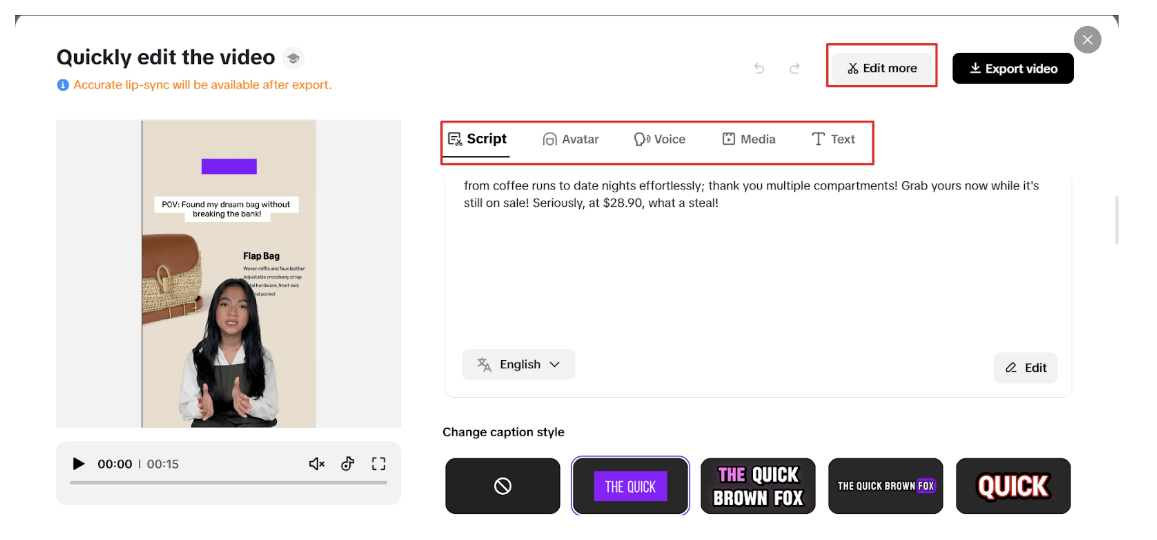
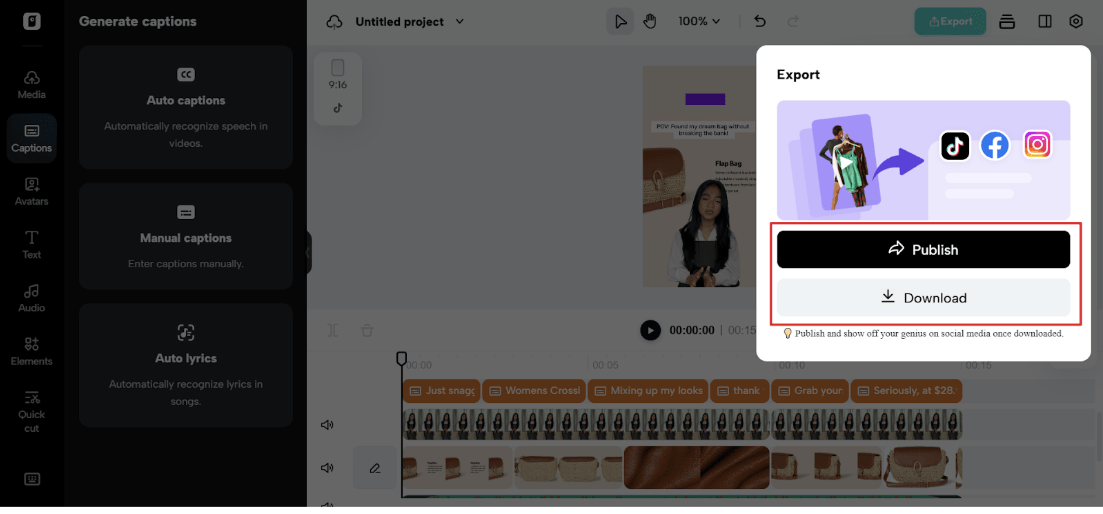
When finished, tap “Export” to produce your completed, high-res moving memories — to share with loved ones, save, or cherish privately forever.
Emotion in pixels: why movement deepens connection
A still image informs us about what happened. A moving image shows us how it felt. As you watch a loved one blink, breathe, or smile in stillness, your mind fills in the rest — the laughter, the stories, the warmth once that clung to that moment.
This is where technology becomes personal. AI movement doesn’t just restore the picture — it rebuilds presence. Suddenly, that black-and-white photograph isn’t just a record — it’s an experience.
It’s what provides contemporary narrative with its power. Because memory shouldn’t be left stranded — it should exist.
Speaking for the silent: AI narration and avatars
One of the most fascinating advancements in AI storytelling is to have the ability to mix movement with voice. Using tools like Pippit’s AI avatar, you can overlay voices that whisper the tale behind an image — perhaps in the voice of a family member, or a narrator that depicts the significance of the moment.
For educational or historical projects, this is an entirely new order of immersion. You can design entire exhibits where the individuals in old photographs appear to narrate their own stories. It’s half art, half history, and very human.
And for family memory-keepers, it’s a way of speaking what was unsaid — of transmuting silence into voice.
Nostalgia meets the next generation
The greatest thing about bringing old photos to life is that it bridges generations. Younger audiences — grown up on movement and sound — can now connect with family history in a way they naturally understand. Instead of riffle through old albums, they get to watch history bring itself to life.
It makes memory something to be shared. Families sit together around a screen and watch a family spring to life — faces long remembered, stories long remembered, now moving again.
It’s not technology nostalgia — it’s cultural continuity. A way to make sure memory won’t fade, but carry on.
Keeping emotion alive in pixels
AI storytelling is not redefining history. It’s recalling it. When a faded photograph springs to life, it tells us that those moments were once real — filled with fear, laughter, love, and light. And within that still reminder is something very human: connection.
With tools like Pippit, memory finds movement — and movement finds meaning. What once gathered dust in drawers now gently glows on screens, reaching far beyond generations to whisper, Remember me like this — alive.
Let your memories breathe again
The past is never past; it’s waiting to be seen in motion. You can animate old family picture albums or vintage photographs into moving emotional stories, full of sound, feeling, and mood, with Pippit. Bring your reminiscences nearer, and give them the pleasure of movement.
Get started with animating your memories using Pippit — because every photo should live again!