Choosing a crypto exchange in 2026 means weighing fees, custody, regulation and the actual way you plan to use your assets. A beginner buying their first Bitcoin has different priorities from someone making occasional swaps or planning to trade regularly. Which crypto exchanges offer the most practical starting point for each of these needs?
Top Crypto Exchanges to Consider for Beginners
The right exchange depends on what a beginner wants to do first. Someone swapping BTC for another asset has different priorities from a first-time fiat buyer, while a future active trader may prefer an exchange with an order book and advanced controls.
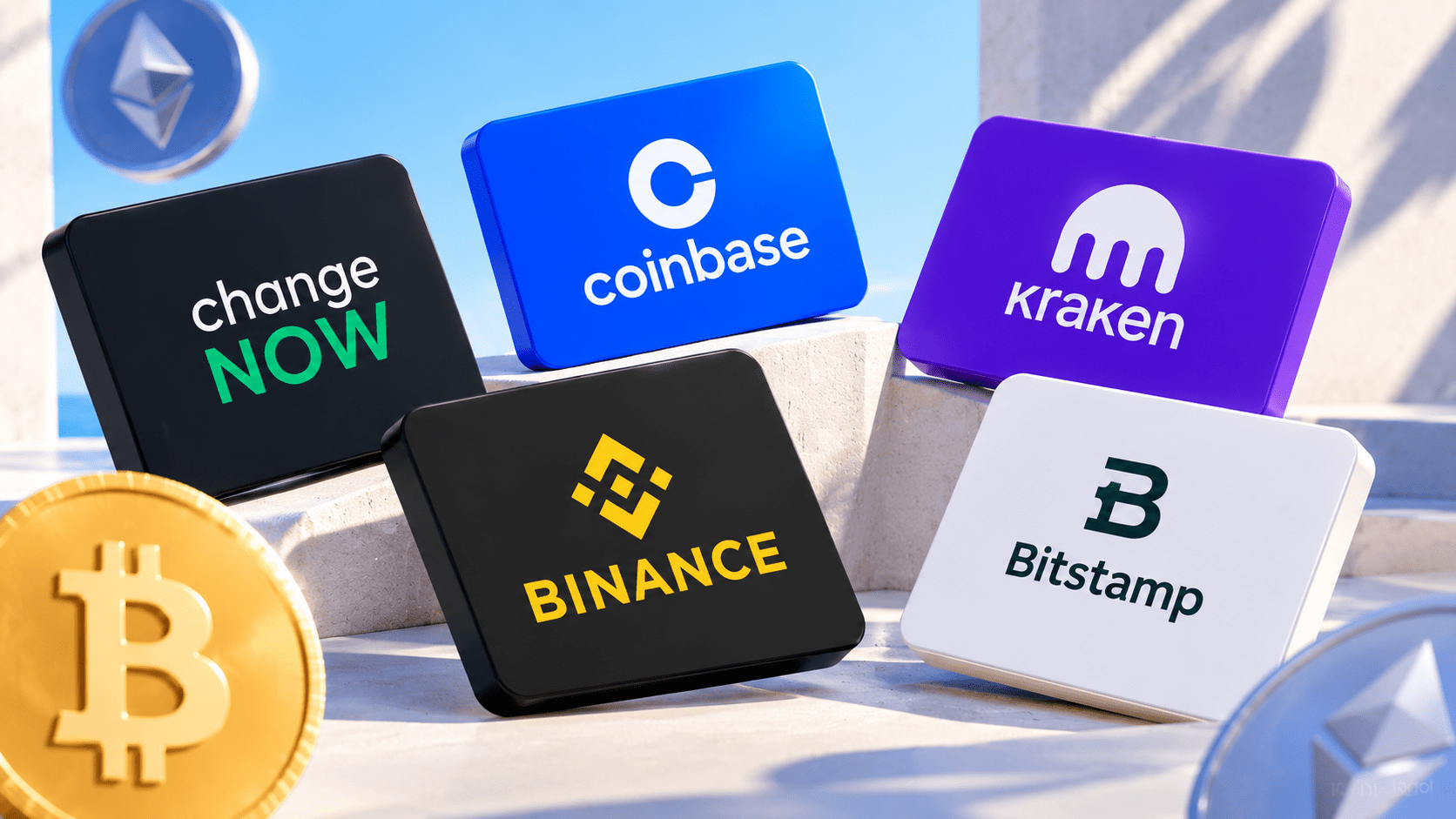
| Exchange | Best for | Main advantage | Main consideration |
| ChangeNOW | Crypto-to-crypto swaps | Direct, wallet-based transactions | Focused on swaps rather than order-book trading |
| Coinbase | First crypto purchase | Simple fiat-to-crypto onboarding | Compare the full purchase cost |
| Kraken | Learning to trade | Simple entry plus advanced tools | Pro features require more knowledge |
| Binance | Broader market access | Wide range of markets and tools | Availability varies by jurisdiction |
| Bitstamp | Conventional exchange experience | Trading, custody and transfers | Smaller asset selection |
1. ChangeNOW
ChangeNOW is suited to users who already hold crypto and need to convert one asset into another. The basic flow involves selecting the assets, entering a destination wallet and sending the crypto required for the swap. The exchanged asset is then sent directly to that wallet.
Key figures and features include:
- 1,000+ cryptocurrencies available for exchange
- 1M+ currency pairs
- Non-custodial swap flow with direct wallet delivery
- Cross-chain swaps across multiple supported networks
This model can be useful when a user wants to convert a specific asset without keeping funds on an exchange account. The Easy Crypto Exchange on ChangeNOW also offers fixed-rate swaps, which let users confirm the quoted exchange rate before sending the deposit, subject to the applicable rate conditions.
Users who need limit orders, an order book or a full trading account will find a traditional exchange more suitable.
2. Coinbase
Coinbase is a straightforward starting point for buying Bitcoin, Ethereum or other cryptocurrencies with fiat. Its standard interface is designed around simple purchases, while Coinbase Advanced adds an order-book environment for users who become more active.
Useful points to compare include:
- Fees on simple purchases can include a spread
- Coinbase Advanced has no spread because orders interact directly with the order book
- Advanced fees are based on 30-day USD trading volume
- Maker and taker rates vary by the user’s current fee tier
- Fee details are shown before an order is submitted
The distinction between the two interfaces is important when comparing costs. A simple purchase and an order-book trade can produce different effective costs even when they involve the same asset. Coinbase states that Advanced fees depend on the applicable volume tier and can change over time.
For a first purchase, the simpler interface may be easier to understand. Someone making regular trades can move to Advanced once order types, spreads and maker/taker fees become familiar.
3. Kraken
Kraken offers a simple entry point alongside a more detailed trading interface. Kraken Pro provides an order book and maker/taker pricing, giving users a path toward regular spot trading without changing platforms.
Relevant figures include:
- 1% trading fee for Instant Buy, Sell and Convert
- 0.40% maker / 0.80% taker at the entry Kraken Pro spot tier
- Lower Pro fees based on 30-day spot volume or assets held on the platform
- Additional payment fees can apply depending on the funding method
The fee structure makes the difference between Kraken’s simple interface and Pro particularly relevant. Instant Buy fees are easier to understand at the point of purchase, while Pro uses a tiered structure that becomes more attractive as trading activity or qualifying assets increase.
Kraken therefore fits beginners who may want to learn conventional spot trading over time. The Pro interface requires more familiarity with order books and execution than a basic buy screen.
4. Binance
Binance suits users who expect to move beyond occasional purchases and explore a wider range of spot markets and trading tools. Its full interface offers considerably more functionality than a basic buying screen, so new users may need time to become comfortable with it.
The main figures and features include:
- 0.10% maker / 0.10% taker for Regular Users on standard spot trading
- Lower rates can apply through BNB discounts and VIP tiers
- Fees are also determined by 30-day trading volume
- EUR payment and transfer options are available in eligible markets
- Availability of products and services varies by jurisdiction
The 0.10% rate applies to standard spot trading and should not be compared directly with the all-in pricing of a simple-buy interface. Binance’s fee schedule also changes according to trading volume, BNB holdings and the specific product being used.
Its broader market access can be useful for beginners who expect to explore more assets and trading functions later. At the same time, the number of available features makes Binance less immediately simple than a platform built primarily around basic purchases.
5. Bitstamp
Bitstamp is a fit for users who prefer a conventional exchange account for buying, selling, custody and transfers. Founded in 2011, it has one of the longer operating histories among established crypto exchanges.
Its main characteristics include:
- Operating history dating to 2011
- Crypto-to-fiat and crypto-to-crypto exchange services
- Custody and transfer services
- Trading through a conventional exchange platform
- MiCA/CASP authorisation for its European operations through Luxembourg’s CSSF
Bitstamp’s narrower product range can make the platform easier to understand for someone interested mainly in established cryptocurrencies and standard exchange functions. Its regulatory status is also relevant for European users comparing platforms that operate under the EU’s MiCA framework.
For any of these exchanges, the final comparison should include the total transaction cost, withdrawal fees and the availability of the specific assets and networks a beginner plans to use.
Key Factors to Compare When Choosing a Crypto Exchange
Once users have a shortlist, five practical factors can affect the choice: total cost, funding and withdrawals, custody, regulation and support.
Total Transaction Cost
Trading fees are only part of the final cost. Spreads, payment fees, network charges and withdrawal fees may also apply.
For small purchases, these costs can noticeably affect the amount received. Compare the final amount after all applicable charges rather than headline fees alone.
Conventional exchanges use order books, while instant-swap services can aggregate liquidity and quote a conversion as one transaction. The ChangeNOW 2026 review describes this model and its direct wallet delivery.
Funding and Withdrawals
Check how easily you can deposit and withdraw funds:
- Fiat support: currencies, bank transfers and cards
- Withdrawal costs: fees, minimums and processing conditions
- Network support: compatibility with the destination wallet
- Regional restrictions: services can vary by country
A low trading fee matters less if the preferred payment method is expensive or the required withdrawal route is unavailable.
Custody
On a custodial exchange, the platform holds the crypto. With a non-custodial service, assets can be sent directly to a wallet controlled by the user.
This also changes the user’s responsibilities. Exchange users should check account security, recovery and withdrawal controls. Self-custody users are responsible for their wallet, private keys or recovery phrase and destination address.
Regulation
Check the legal entity serving your country, since the same brand can operate through different entities with different products and restrictions.
For EU users, MiCA is now a practical criterion. The transitional period for existing crypto-asset service providers ended on 1 July 2026, after which unauthorised providers must cease serving EU clients.
Support and Account Recovery
Check the available support channels, account recovery process, verification requirements and withdrawal controls before registering.
These details become important when a deposit is delayed, an account is locked or a withdrawal requires additional review.
Choosing an Exchange Based on Your Goals
Different first transactions call for different priorities. The choice becomes clearer when the exchange is assessed against what the user actually plans to do with the crypto.
| First goal | What to prioritize |
| Buy BTC or ETH with fiat | Payment flow and final purchase amount |
| Swap crypto already held | Conversion route and network compatibility |
| Trade regularly | Execution, order types and market depth |
| Hold crypto long term | Account access, records and withdrawal flexibility |
Buying Crypto With Fiat
For a first BTC or ETH purchase, the payment process and final amount received matter most. Users should be able to understand the order before confirming it and access a clear record of the transaction afterward.
Swapping Crypto Already Held
Someone who already owns crypto has a different task from a first-time buyer. The important details are whether the required conversion is available, which network carries the transaction and where the resulting assets can be sent.
Trading Regularly
Frequent trading puts more weight on execution and market conditions. Order types and market depth become increasingly relevant as trade frequency and position size grow.
Holding Crypto Long Term
Long-term holders interact with an exchange less frequently, so day-to-day trading features matter less. Continued account access, reliable transaction records and the ability to withdraw assets when needed become more important.
A suitable starting point can change as the user’s activity changes. The priorities for a first purchase are different from those for regular trading or long-term asset management.
How Crypto Exchange Rules Are Changing in 2026
Crypto exchange features can differ by country. In the EU, the end of the MiCA transition period on 1 July 2026 means regulatory status now directly affects whether a provider can continue serving European customers.
Product availability can also change within the same exchange. In 2026, Kraken restricted trading of USDT, DAI, PYUSD, RLUSD and several other stablecoins for EEA customers, although some remained available for deposits and withdrawals. A beginner comparing exchanges should therefore check:
- Regulatory status: which legal entity serves your country
- Asset availability: which coins and stablecoins you can actually trade
- Payment methods: which deposits and withdrawals are available locally
- Network support: which blockchain networks are supported for transfers
These details can have more practical importance than a global asset count or a headline trading fee.
Choosing Your First Crypto Exchange
For beginners, the best exchange is the one that fits the first transaction and remains practical as their needs change. Fiat purchases require clear pricing and convenient funding, crypto swaps depend on supported assets and networks, while regular trading makes fees, order books and execution more important. Location also matters, since regulation, asset availability, withdrawal options and custody can vary between countries and determine whether an exchange remains suitable over time.
Disclaimer: This article is for informational purposes only and does not constitute financial, investment or legal advice. Cryptocurrency involves risk, including the potential loss of funds. Exchange availability, fees, supported assets and regulatory requirements may change, so check the current terms and conditions before using any platform.