Bitcoin can reach a recipient in another country, yet the final stage of the transaction remains local. The recipient may need Swiss franc banknotes, money in a bank account or funds for an everyday purchase. Simply holding BTC does not determine how they will receive that money. When converting cryptocurrency into cash, the outcome depends on the settlement method, the total cost and the availability of a payout.
This is Bitcoin’s “last mile”: the gap between a digital asset and money in the form the user needs. Switzerland provides a practical example because physical exchange locations are available alongside online services. Their usefulness is best assessed against the recipient’s specific needs.
What cashing out Bitcoin actually means
The term “cash-out” is used to describe several different outcomes. Selling BTC on an exchange may leave a fiat currency balance in a platform account. Withdrawing by bank transfer then moves the funds to a bank account. Only collecting banknotes means receiving cash in the literal sense.
This distinction affects the choice of service. Someone paying an invoice by bank transfer may complete the process with funds in a bank account. Someone who needs CHF banknotes still has to find a way to collect them. Converting BTC into a stablecoin, meanwhile, keeps the user within digital assets and does not in itself provide a payout in francs.
It is therefore worth starting with the desired outcome: what amount, in which currency and in what form should be available? Only then should you compare methods. This prevents a low fee for the sale alone from obscuring the cost of a subsequent transfer, currency conversion or withdrawal.
Three routes from BTC to local currency
An exchange and a bank transfer
On an exchange, the user sells BTC for a supported currency and then requests a withdrawal. If the funds are intended for a bank account, this route can be convenient, particularly with an already verified account and an appropriate trading pair available.
Include the trading fee, transfer terms and any currency conversion. Also check the recipient account’s currency and the processing time stated by the provider. If you ultimately need banknotes, add the step of withdrawing them from the account.
A transaction with another user
In a P2P model, the seller and buyer agree on an offer and payment method, sometimes with support from a platform. Settlement may be by bank transfer and, with selected services, also in cash. The counterparty’s availability, their terms and the dispute resolution mechanism all matter.
The price shown in a listing is not enough to assess an offer. Limits, the payment deadline and the ability to verify that the money has actually arrived also matter. A screenshot sent by the other person does not replace confirmation of receipt in your own account. Collecting cash in person also raises questions about the meeting place and both parties’ safety.
A Bitcoin ATM with a sell function
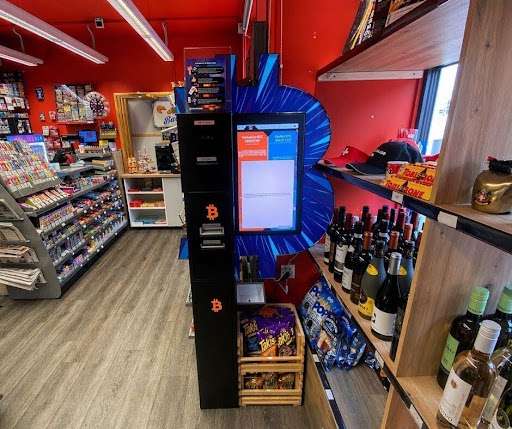
A two-way Bitcoin ATM lets you exchange a supported cryptocurrency for banknotes. Such a location can meet the needs of someone who wants to collect cash at a specific place. This requires a SELL function, meaning cryptocurrency sales, and a sufficient cash supply in the machine.
The advantage of a physical location is the ability to collect banknotes at a chosen place. Compare the final amount, the journey and the identification requirements. Your plan should also include the required number of network confirmations and the availability of the payout function.
Transaction time involves more than the blockchain
When cashing out, it is worth separating the time needed to transfer BTC, process the order and make the money available. A sent transaction visible in the wallet may still be awaiting confirmation. The operator or exchange determines when it considers a deposit sufficiently confirmed.
Bitcoin produces new blocks roughly every ten minutes on average, but this does not guarantee the timing of an individual transaction. The wait also depends on network congestion and the fee. If the BTC are held on a custodial platform, that platform’s processing of the withdrawal request adds another stage.
On the fiat side, timing may depend on the transfer method, transaction checks or the cash location’s opening hours. For someone who needs banknotes in the evening, being able to enter the premises may matter more than blockchain speed alone. A cash-out plan should cover the entire process through to receiving the funds.
The final amount says more than the fee alone
A price from a market data service is a benchmark. An executable quote reflects the terms of the particular provider. A comparison needs to check the exchange rate difference, trading fee, cost of sending BTC and any withdrawal or currency conversion fee. Some costs may already be included in the displayed price and should not be counted twice.
Compare the outcome for the same total BTC debit from the wallet, at a similar time and with the same way of receiving the funds. A purely illustrative calculation: if the BTC given up, including the sending cost, are worth CHF 1,000 at the reference rate and you receive CHF 960 in cash, the difference is CHF 40, or 4%. This is not a current offer. Separate the cost of the service from changes in the BTC price between the quotes being compared.
A comparison record should include the date and time, the total amount of BTC leaving the wallet, the final CHF amount, the way the funds are received, the quote’s validity, identification requirements and the earliest confirmed collection time. For an exchange, include the route from the platform balance to banknotes if you need cash. For P2P, check whether the offer is executable for your amount. For an ATM, confirm SELL and banknote availability. A blank field means an incomplete comparison, not zero cost.
Switzerland shows why the specific location matters
The map of Bitcoin ATMs in Switzerland on the Rothbard aggregator helps you choose a location and open information about the individual point. Before travelling there, check access hours, the sell function and the available cash amount. If a status cannot be checked, clarify it with support before sending funds.
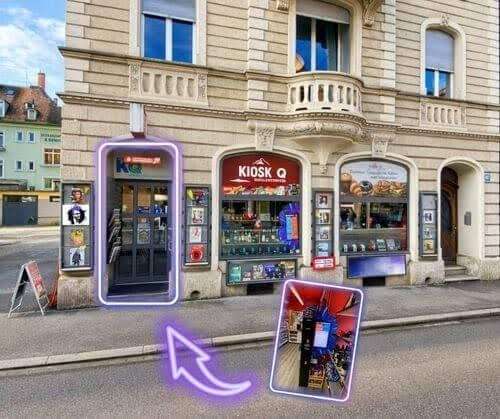
Open the listing for the Bitcoin ATM on Limmatstrasse in Zurich before heading out to collect cash: the machine is described as being in the Quellen kiosk at number 197, with an entrance from the street. Check the hours for the day of your visit, the payout function and current terms. Do not send BTC based solely on a location’s address; payment details must come from a specific order issued by the operator.
Another example is the Bitcoin ATM Basel at Feldbergstrasse 100, inside the Vasa Lebensmittel shop. When collecting cash, plan your visit within the premises’ access hours. Base your choice between locations on the route, available amount and terms of the specific order.
Security starts before you send funds
When converting BTC into cash, both the destination address and the provider’s identity matter. Obtain transaction details from the provider’s official service or machine. Never share your wallet’s recovery phrase, and keep the transaction receipt until the payout is complete.
Find out the identification requirements before starting the operation. For example, Rothbard’s Limmatstrasse location page states that an identity document is verified. Cash settlement does not automatically mean anonymity.
Take particular care if a stranger on the phone instructs you to send BTC to a supposed “safe account”. Using a real ATM or a well-known exchange does not establish the recipient’s legitimacy. An approved transfer cannot simply be cancelled like an order that has not yet been sent.
Plan the final stage first
Start your choice with the end requirement: “I need a specific amount of CHF in banknotes at a given place and time” or “a bank transfer is enough”. Then eliminate routes that do not meet that requirement. Compare costs only among those that remain. The lowest fee for the sale alone does not compensate for being unable to receive the money on time.
After the transaction, keep a private record of the final amount, the time taken at each stage, the order number and the TxID if one has been assigned. This record lets you compare the promised service with what was delivered and clarify a delay with the provider. Do not publicly share collection codes, identity documents or data that could link a wallet to an identity. The value of the last mile lies in actually receiving the funds, not merely in a “sent” status.