The online casino industry is undergoing a significant transformation, and one of the most notable trends is the growing use of cryptocurrency — from Bitcoin and Ethereum to stablecoins like USDT, digital currencies are reshaping how players deposit, wager, and withdraw funds. But while most coverage of this shift focuses on European regulated markets, there is a far larger and almost entirely overlooked crypto gambling story unfolding in Asia: Japan.
Japan does not have a domestic online casino licensing framework. There are no state-licensed digital casino operators. And yet Japan is, by most credible estimates, one of the largest online gambling markets in the world by player volume and gross spend — a market served entirely by offshore platforms, funded predominantly through cryptocurrency, and navigated by millions of players with no domestic regulator providing oversight or consumer protection.
Understanding why crypto has become the dominant payment infrastructure for Japanese casino players — and what that means for platform selection — requires understanding the market’s specific dynamics.
Why Crypto Dominates Japan’s Casino Payment Stack
Japan’s online casino players face a payment infrastructure problem that cryptocurrency solves more completely than anywhere else in the world.
Traditional bank transfers to offshore gambling platforms are technically possible from Japan but practically difficult. Japanese financial institutions are increasingly reluctant to process transactions to identifiable gambling sites, and players who attempt bank transfers to offshore casinos face a meaningful probability of transactions being flagged, delayed, or declined. Credit cards face similar friction — card scheme rules and Japanese issuer policies create inconsistent acceptance rates for gambling merchant category codes.
Cryptocurrency bypasses this infrastructure entirely. A player who owns BTC, ETH, or USDT can deposit to any offshore casino without the transaction passing through a bank or card network that might block it. The process of betting with cryptocurrency provides benefits like faster withdrawals, lower fees, and more privacy compared to regular payment methods. For Japanese players operating without domestic payment rails designed for casino transactions, these are not optional conveniences — they are the practical prerequisites for participating in the market at all.
This structural dependency on crypto as the primary access mechanism has made Japan’s online casino player base disproportionately crypto-native relative to other major gambling markets. Japanese players do not use crypto because it is fashionable. They use it because the alternative is significantly harder.
The Stablecoin Preference: Why USDT Dominates Japanese Casino Deposits
Among the cryptocurrencies used by Japanese casino players, stablecoins — particularly USDT — have emerged as the dominant deposit and withdrawal vehicle, for reasons that reflect the market’s specific risk preferences.
Japanese players accessing offshore casinos are already carrying meaningful financial risk: they are depositing with operators in foreign jurisdictions with limited domestic legal recourse if something goes wrong. Adding Bitcoin’s price volatility on top of that risk creates a compounded exposure that most players prefer to avoid. A session funded by USDT starts and ends with a stable value regardless of what BTC does while the games are running.
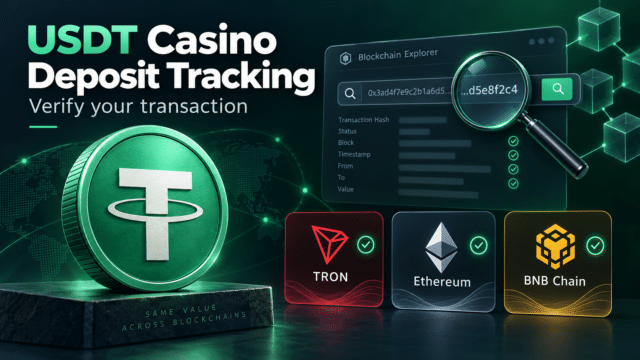
USDT on the Tron network (TRC-20) has become particularly prevalent because its transaction costs are a fraction of a cent and confirmation times are typically under a minute — making it the closest thing to instant, near-free casino deposits available in any payment infrastructure globally.
The practical implication for platform evaluation: a casino that offers only BTC and ETH as cryptocurrency options is providing a significantly inferior crypto payment experience for Japanese players compared to one that also supports TRC-20 USDT, XRP, or other low-fee, fast-settlement alternatives. Supported coin list is not a secondary feature — it is a primary evaluation criterion.
What Japan-Specific Crypto Casino Infrastructure Looks Like
The offshore casino industry has not been passive in responding to Japanese demand. Over the past several years, a meaningful subset of international crypto casino operators has invested in Japan-specific infrastructure that goes beyond accepting crypto payments.
Yen-denominated bonus structures. Operators that have genuinely committed to the Japanese market denominate their welcome bonuses, reload offers, and cashback programs in JPY rather than requiring players to convert mentally from USD or EUR. A ‘100% up to 100,000 yen’ bonus structure signals market commitment; a ‘100% up to $500’ bonus with a note that ‘currency conversion applies’ signals a global platform that has activated Japanese language settings.
Japanese-language live support. Japanese online casinos that support local payment methods and Japanese-language customer service ensure seamless transactions and reduce currency conversion costs. The difference between a platform staffed by Japanese-speaking support agents versus one running international support through translation tools is material when a player has a withdrawal dispute or a KYC verification question.
Crypto-first withdrawal infrastructure. The best Japan-focused platforms have built withdrawal flows optimised for crypto rather than retrofitted from fiat-primary systems. This means no artificial delays between request and processing, transparent on-chain confirmation tracking, and withdrawal limits calibrated to the high-value player profile that characterises Japan’s crypto casino market.
Provably fair game libraries. Japan’s crypto casino players — many of whom came to online gambling through pachinko, where probability transparency is culturally expected — have higher-than-average interest in provably fair game implementations. Platforms that offer verifiable RNG across their core game library have a competitive advantage in this market.
How to Evaluate a Crypto Casino for the Japanese Market
Generic global crypto casino rankings do not serve Japanese players well, because the evaluation criteria that matter most in this market are not the same as those that matter in regulated European markets.
Settlement speed across supported coins. BTC deposits require 3+ confirmations and can take 30-60 minutes. TRC-20 USDT typically confirms in under a minute. ETH mainnet varies with gas prices. Knowing which chains a platform settles on — and at what speed — is the first evaluation step.
Yen support and bonus currency. Does the platform actually operate in JPY, or does it convert? Bonuses denominated in JPY with JPY wagering requirements are directly comparable; bonuses that require currency conversion introduce a friction layer that obscures real value.
KYC requirements at the crypto tier. Japan’s grey-zone market means players are often reluctant to submit extensive identity documentation to foreign operators. Understanding at what deposit or withdrawal volume a platform requires verification — and what documents it accepts — is a practical evaluation criterion specific to this market.
Japanese-language support hours. Japan Standard Time is UTC+9. A platform with customer support staffed only during European business hours is functionally unavailable during peak Japanese playing hours. 24/7 Japanese-language live chat is the baseline requirement for serious Japan-market operators.
Wagering requirements on crypto bonuses. Some platforms apply different wagering requirements to crypto deposits versus fiat — either more restrictive or less restrictive depending on the operator’s acquisition strategy. This affects the real value of a welcome bonus for crypto-depositing players.
Japan’s crypto casino market has its own distinct characteristics that generic global rankings miss: payment methods that actually clear for Japanese players, yen-denominated bonus structures, Japanese-language customer support availability at the live chat tier, and the specific licensing frameworks that define operator reliability in a market without domestic regulation. For players in Japan navigating these specifics, Oncasitown crypto casino reviews covers the full landscape — evaluating platforms across crypto settlement speed, supported coins including BTC, ETH, USDT, and XRP, provably fair game availability, withdrawal limits, and bonus wagering requirements for crypto deposits — making it the most Japan-specific resource available for players who want to use cryptocurrency rather than fiat and need platform comparisons calibrated to their market.
The Regulatory Horizon: What Potential Japanese Online Casino Regulation Means for Crypto
Japan’s regulatory framework for online casinos is static for now but not permanently so. The 2018 Integrated Resort Implementation Act legalised casino resorts in a limited physical framework, and policy discussions have periodically touched on whether digital regulation might accompany physical IR development.
The crypto industry is entering a new era of regulation in 2026, and by learning from iGaming’s proven compliance systems, crypto platforms can balance regulatory demands with user experience and build long-term institutional trust. If Japan introduces an online casino regulatory framework, the operators that have built the deepest Japan-specific crypto infrastructure are best positioned to seek licensing — they already have the payment systems, the language operations, and the customer base that a Japanese regulatory framework would need to accommodate.
For players, the trajectory matters less than the current landscape. The grey zone is the operating reality of the Japanese market today, and the platforms that have built genuine Japan-specific infrastructure — including serious crypto payment architecture — are the ones providing the best current player experience regardless of what regulatory development follows.
Conclusion: Japan as the Blueprint for Crypto-Native Casino Markets
Japan’s online casino market represents something unusual in global iGaming: a major, high-spending player base that adopted cryptocurrency not as a speculative investment vehicle or a technological novelty, but as the practical infrastructure required to access entertainment they wanted to consume.
The crypto casino space depends on fast transactions and great network reliability. Japan’s crypto casino players discovered this before most markets did, because they had no choice. The result is a market that is more crypto-native, more technically sophisticated about payment infrastructure, and more demanding about platform quality than almost any other gambling market in the world.
For platform operators, Japan is the blueprint for what a crypto-first casino market looks like at scale. For players navigating it, the evaluation framework is straightforward: find the platforms that have built for this market specifically, verify their crypto infrastructure against the criteria above, and treat the quality of their cryptocurrency payment architecture as a primary signal of their overall commitment to the Japanese player base.