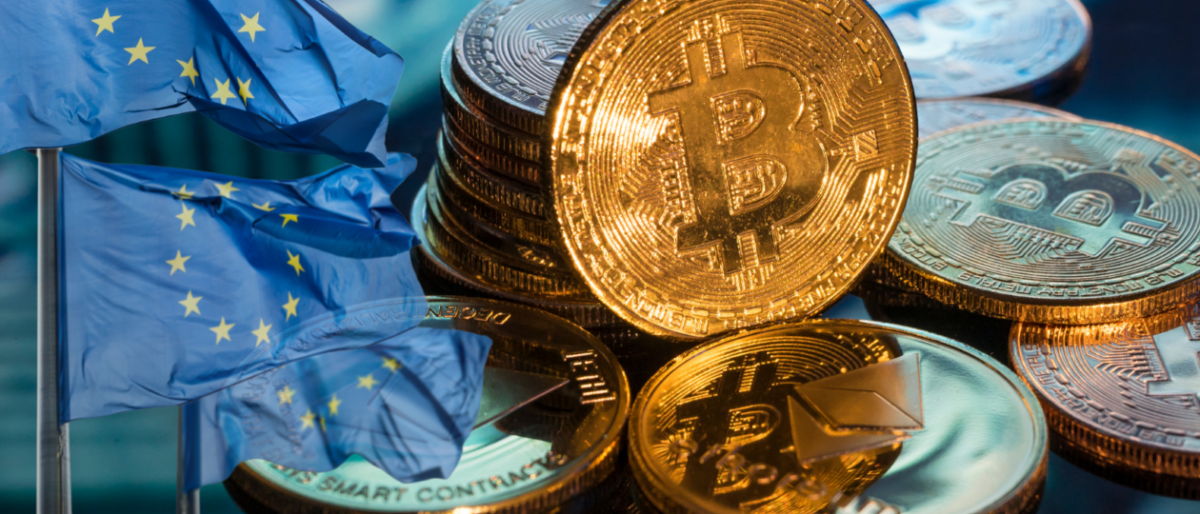
Digital assets moved from a niche financial tool into a recognised part of the European financial system. Surveys conducted in early 2025 show widespread awareness of cryptocurrencies across major European economies. Ownership across eurozone countries expanded quickly while regulatory clarity and new trading infrastructure developed across the region.
Digital currencies within online services
Cryptocurrencies support a wide range of financial uses across online services. Digital tokens enable payments, trading, and participation in online gaming through blockchain networks. Speed and borderless transfers attract many users while transaction records remain visible on public ledgers.
Online gambling platforms frequently accept crypto deposits because cross-border transfers are quick on the blockchain. Many players search for trusted directories while exploring platforms that accept digital currencies. Play Casino, an expert-led casino review platform, presents regulated operators working under recognised international gaming licences.
Each listed platform has undergone a thorough verification process, during which licensing, operational history, security, and reliability are tested. Licensed environments create structured oversight across gaming platforms that support digital currencies. Such oversight demonstrates how blockchain payments integrate with regulated online services across Europe.
Awareness of crypto across Europe
Public familiarity with cryptocurrencies stands extremely high across European economies. Research from the Web3 Industry in France and Europe report, produced by Adan, shows that awareness exceeds 90 percent among adults aged 18 and above in major European economies.
High awareness developed through constant media coverage, trading platforms, and financial discussions across digital channels. Widespread understanding creates favourable conditions for ownership growth because many adults recognise basic blockchain functions.
Recognition of digital assets forms the foundation for broader adoption. Individuals who understand the technology often explore exchanges and digital wallets that provide access to cryptocurrencies.
Eurozone ownership levels
Survey data from the European Central Bank shows that nine percent of adults across the eurozone hold crypto assets. That figure reflects a strong increase across the region during recent years.
Ownership varies across the twenty eurozone countries, although differences remain relatively small. Slovenia leads the region with fifteen percent of adults holding digital assets.
Greece follows Slovenia closely in the ranking. Ireland, Croatia, Cyprus, Lithuania, and Austria share the next position with similar ownership levels.
Germany and the Netherlands display lower participation levels, with six percent of adults holding cryptocurrencies. Despite those differences, adoption continues spreading gradually across the region.
Significant growth occurred across several countries during recent years. Greece and Lithuania recorded the largest increases, with ownership rising by ten percentage points.
Cyprus, Belgium, Ireland, Austria, Slovakia, Slovenia, Portugal, and Italy each recorded increases of seven percentage points or higher.
Why adoption varies between countries
Differences in national ownership levels reflect several structural elements. James Sullivan, chief risk and compliance officer at BCB Group, links adoption patterns to digital innovation and investor demographics.
Countries with strong technology sectors often record higher engagement with digital assets. Investor profiles frequently influence adoption patterns as well.
Retail investors exploring financial technology frequently participate in cryptocurrency trading. Local economic structures influence behaviour, as digital assets sometimes attract speculative activity when traditional investment opportunities remain limited.
Public awareness campaigns also shape adoption levels. Italy offers a clear example where strong educational outreach helped increase familiarity with digital assets.
Outside the eurozone, the United Kingdom records significant trading activity. Sullivan reports that the UK ranks third globally in cryptocurrency transaction volume behind the United States and India.
Regulation reshapes the European crypto sector
Regulatory clarity continues to influence the development of European crypto markets. The Markets in Crypto Assets Regulation, known as MiCA, was approved by the European Parliament in April 2023.
MiCA introduces the first comprehensive regulatory framework designed specifically for crypto assets. The regulation defines several categories, including cryptocurrencies, utility tokens, and stablecoins.
Crypto service providers must register with national authorities while complying with anti-money laundering and counter-terrorism financing requirements. Platforms must present transparent information explaining the characteristics and potential financial exposure of digital assets.
Licensing requirements apply to exchanges, wallet providers, and custodial services. Regulatory oversight aims to strengthen transparency while supporting structured activity across the crypto sector.
New financial products and institutional activity
Institutional participation continues expanding across the European crypto sector. Coinbase recently introduced regulated futures trading across 26 European markets.
The service operates through the company’s MiFID-regulated entity. Eligible traders gain access to derivatives linked to major cryptocurrencies, including Bitcoin and Solana.
The platform also lists equity index futures and offers trading fees of approximately 0.02 percent per contract. These contracts appear in two main formats.
Perpetual style futures include expiries extending up to five years with hourly funding mechanisms that align prices with underlying assets. A second category includes dated futures that settle monthly or quarterly according to official exchange prices.
Leverage levels reach up to ten times across selected contracts, including Bitcoin and Ethereum derivatives.
Technology developments shaping adoption
Technological progress continues to expand the use of digital assets across financial services. Decentralised finance platforms provide blockchain-based applications that operate via smart contracts.
These systems enable lending, borrowing, decentralised exchanges, and liquidity pools through automated agreements. Blockchain networks maintain transparency because transactions remain visible on public ledgers.
Payment technology also evolves through second-layer protocols such as the Lightning Network. This system operates on top of the Bitcoin blockchain while enabling faster transactions and lower fees.
Participants open payment channels through multi-signature transactions recorded on the main blockchain. Transactions occur within the channel, while final balances are settled later on the underlying network.
Several developments combine to explain the rapid rise of crypto ownership across eurozone countries. Widespread awareness, evolving regulations, new financial services, and advancing blockchain technology continue to shape participation across the European crypto market.