Bitcoin’s payment story never needed every shop to accept it. Its stronger test was narrower: where does a digital currency feel less like a novelty and more like a practical rail? Online gaming answered that question early because the product, wallet, and payment moment all live on the same screen.
A 2024 open-access study on Bitcoin adoption in online payments links consumer interest to usefulness, ease of use, and the way people talk about the technology. That explains why entertainment categories moved faster than many retail settings. The user doesn’t need to imagine a coin replacing every daily payment. They only need it to work well inside one digital activity.
Why Gaming Made Bitcoin Feel Practical
The clearest place to understand Bitcoin as a payment method is a digital setting where account funding happens before the activity begins, such as on a gaming platform. These platforms focus on maximizing convenience and security, meaning that it suits them to offer a whole range of crypto choices, often alongside fiat currencies.
In that context, a reader comparing an online casino in Canada is not only looking at game variety. They’ve got payment options to consider too – CAD transactions, familiar banking options, and crypto deposits. Within the crypto section, they can choose between Bitcoin, Ethereum, USDT, Litecoin, and Bitcoin Cash.
Regardless of the payment type selected, they will have access to several game formats inside one account environment. The casino presents slots, live casino tables, blackjack, table games, specialty games, roulette, and mobile play. That mix shows why online gaming became a durable Bitcoin payment use case: the user has time to choose a method, check the coin being used, and treat the transfer as part of account funding, rather than a rushed checkout.
This kind of online casino also makes the multi-coin question easier to understand. Bitcoin may be the familiar name, but users comparing speed, fees, and value stability may notice that different coins suit different payment habits.
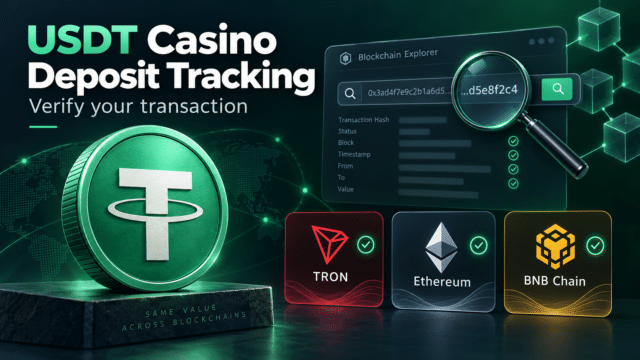
The coin-level choice is where it gets interesting. A guide to popular cryptocurrencies used for betting separates Bitcoin from Bitcoin Cash, Bitcoin SV, Ethereum, Litecoin, and USDT. That distinction matters. Bitcoin brings recognition and market support. Litecoin is often discussed as a lighter payment option. Ethereum has gas fees to consider. USDT adds a stablecoin model for users who want less price movement during a short payment window.
The Payment Moment Is Different Online
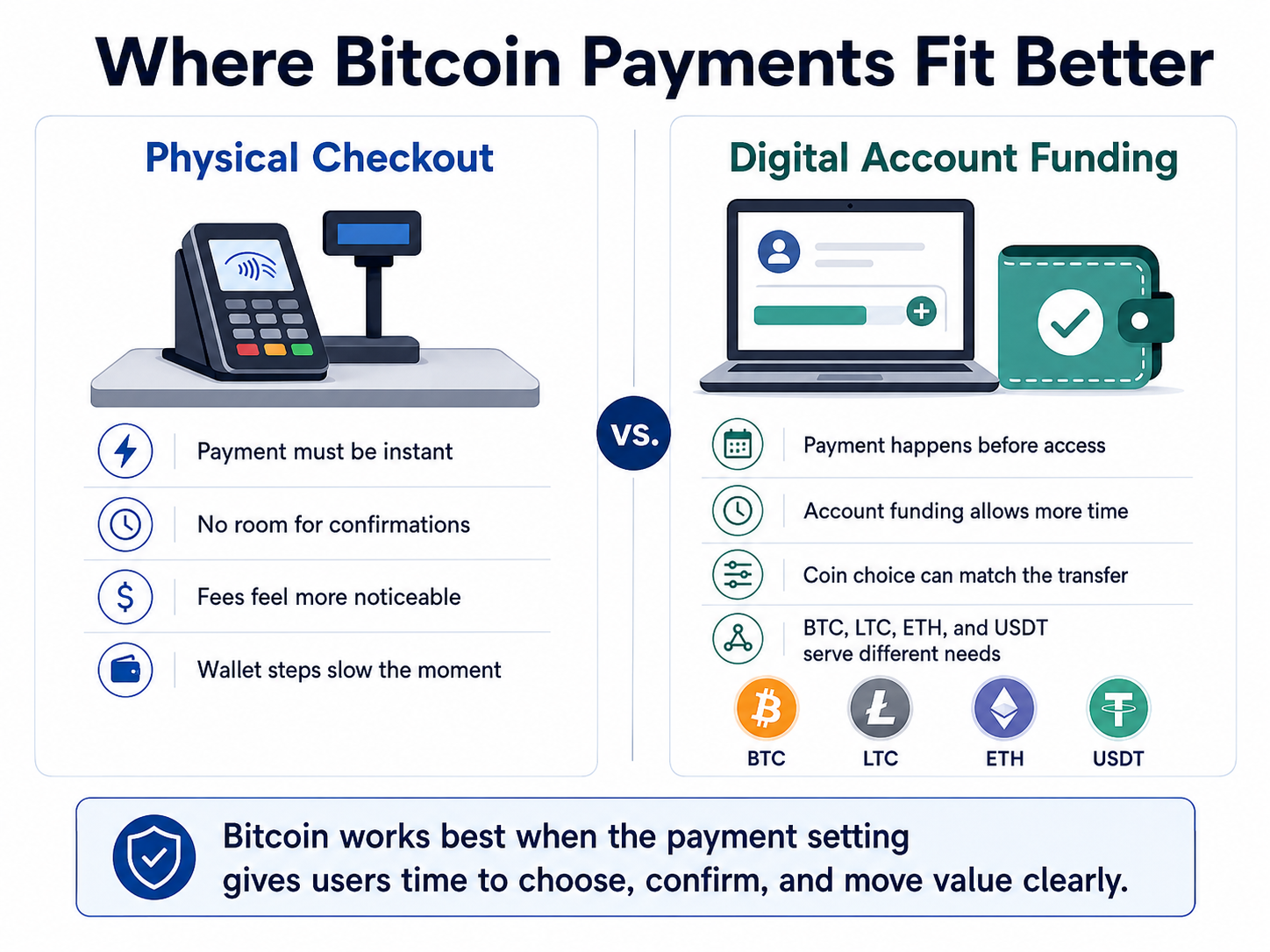
Bitcoin can feel clumsy when the payment moment demands instant checkout. A coffee line is not built for confirmations, wallet checks, or fee decisions. Online entertainment has a different rhythm. The user is already in an account environment, already making screen-based choices, and understands that they need to provide funding before the activity begins.
That difference gives Bitcoin more room to work. The user can choose a coin, confirm wallet details, and wait for processing without holding up a cashier or disrupting a physical queue. The payment action belongs to the same digital routine as choosing a game format, checking an account balance, or switching from desktop to mobile.
The broader lesson is that Bitcoin payments work best when the setting absorbs their quirks. Confirmation time, network load, and fee levels still matter, but they do not feel equally disruptive everywhere. In online gaming, those factors can be treated as part of account funding. In physical retail, the same factors can feel too heavy for a quick purchase.
Why One Coin Is Not the Whole Story
Bitcoin’s brand recognition helped open the door, but online gaming payments quickly became a multi-coin question. That shift is practical. People do not use every coin for the same reason.
Bitcoin is widely recognized and easy to track across exchanges and wallets. Bitcoin Cash and Bitcoin SV are usually described through the lens of larger block capacity and lower-fee movement. Litecoin has long been positioned as a faster, lighter Bitcoin alternative. Ethereum gives users access to a broader programmable network, but gas fees can change the payment experience. USDT solves a separate problem by keeping its unit value close to the US dollar.
Those differences are not trivial. They shape the user’s payment experience. A person sending a larger Bitcoin amount may care less about a fee than someone making smaller, more frequent deposits. Someone using Ethereum may check gas conditions first. Someone using USDT may prefer price clarity during the transfer. The category matured because the payment question became more specific than “does this site accept crypto?”
The Durable Use Case Was Never Universal
Bitcoin’s most durable spending use cases share a pattern. They appear where users are already comfortable with digital accounts, balances, wallet apps, and a short delay between payment and activity. Online gaming fits because the payment does not need to behave like tapping a card at a supermarket. It needs to be clear, supported, and suitable for a screen-first transaction.
This also explains why Bitcoin can be both limited and useful at the same time. It has not become the default payment method for every ordinary purchase. Still, it remains relevant where the buyer understands digital value movement, and where the merchant can support crypto without making the experience feel unusual.
Online gaming became one of the clearest examples because it did not ask Bitcoin to be everything. It gave the network a job that matched the setting: move value into a digital account, alongside other payment methods, for an activity that was already fully online. As long as users keep comparing speed, fee levels, and confirmation timing, Bitcoin’s payment story will continue to evolve.