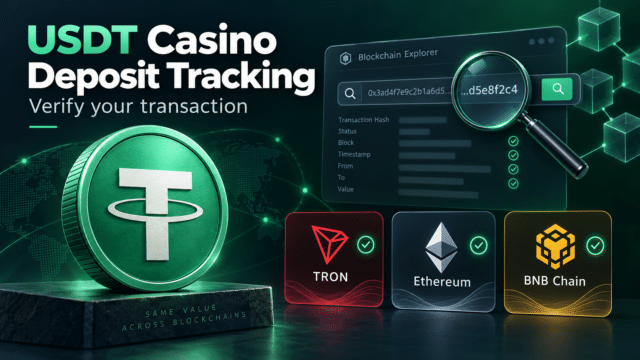
In some sense, online casinos operated solely on trust for decades. Players deposited money through banks and credit cards, hoping the platform would pay out honestly and that their financial details would stay secure. Operators promised fair games without much in the way of independent verification. To be fair, the system worked well enough until something better came along. However, cryptocurrency didn’t just add another payment option to the casino lobby; it changed the structural relationship between players and platforms in ways that are still unfolding today.
Speed and Control Over Your Own Money
The most immediately visible change crypto brought to online casino banking was withdrawal speed. Traditional payment methods, like credit cards, bank transfers, and most e-wallets, carry processing timelines that range from 24 hours to several business days. Players who won money had to wait for it, with limited visibility into where in the process their withdrawal actually sat.
Crypto withdrawals work differently. Blockchain transactions don’t require banking intermediaries, which means a withdrawal can process in minutes rather than days. For players who value having control over their own funds, the difference is significant. For example, this online casino processes cryptocurrency withdrawals within 24 hours as a standard. They also tend to offer generous welcome bonuses on first crypto deposits, with low wagering requirements too. This is a reflection of the structural advantage some platforms pass on to players who use digital assets rather than traditional banking.
The lower processing fees that come with crypto transactions represent another form of value transfer. Traditional payment rails extract fees at multiple points – from the card network, the payment processor, and sometimes the casino itself. Blockchain transactions remove most of those intermediaries, which means more of the deposited value actually reaches the player’s casino account.
Privacy Without Anonymity Theater
Crypto deposits at online casinos reduce the amount of sensitive financial information that needs to pass through third parties. A credit card deposit creates a record at the card network, the issuing bank, and any payment processor involved. A crypto deposit creates a blockchain record that is publicly verifiable but doesn’t carry personal banking details tied to the transaction. Some players much prefer this approach, allowing them to keep their leisure activities private. The casino may still have some KYC verification at relevant thresholds, but it does represent a meaningful reduction in the number of parties with access to transaction data.
Stablecoins Have Changed the Risk Profile
Early crypto casino adoption was complicated by volatility. A player who deposited Bitcoin when it was trading at one price could see the dollar-equivalent value of their casino balance change significantly by the time they went to withdraw. For players who wanted crypto’s speed and accessibility without exposure to price swings, this created a genuine tension.
That’s where stablecoins come in. USDT, USDC, and similar assets track fiat currencies while operating on blockchain rails, which means players get crypto’s transaction speed and low fees without the exposure to market volatility.
The stablecoin market capitalization crossed $305 billion in mid-2026, reflecting how broadly these assets have been adopted as a practical payment tool across industries including online gaming. Most serious crypto casino platforms now accept multiple stablecoins alongside Bitcoin, Ethereum, and Litecoin, giving players a full range of options, depending on their preference for stability versus potential appreciation.
Where You Play From No Longer Matters
Traditional payment methods carry the friction of their origin – currency conversion fees, international transaction charges, and processing delays that compound when funds cross borders. Players have historically absorbed those costs as a baseline part of the experience.
Crypto removes most of that friction at the infrastructure level. Bitcoin, Ethereum, and Litecoin don’t carry currency conversion requirements. A deposit from anywhere arrives in the same form as it left, with no intermediary converting it along the way. The processing timeline is determined by the blockchain network rather than a chain of correspondent banking relationships, which means the deposit and withdrawal experience is consistent, regardless of where a player is located. The platform is the same from any geographical location (dependent on regional accessibility).
What Has and Hasn’t Changed
Crypto has transformed the financial layer of online casino gaming in ways that are clearly positive for players who choose to use it. Faster withdrawals, lower fees, reduced friction, and stablecoin options for those who prefer price stability – these are genuine improvements over the traditional model.
What hasn’t changed is the underlying nature of casino games. The house edge on a slot machine is the same whether the deposit came in via Bitcoin or Visa. Blackjack basic strategy produces the same expected outcomes, regardless of the payment method used to fund the session. Crypto simply improves the experience around the games – it doesn’t change what the games are.