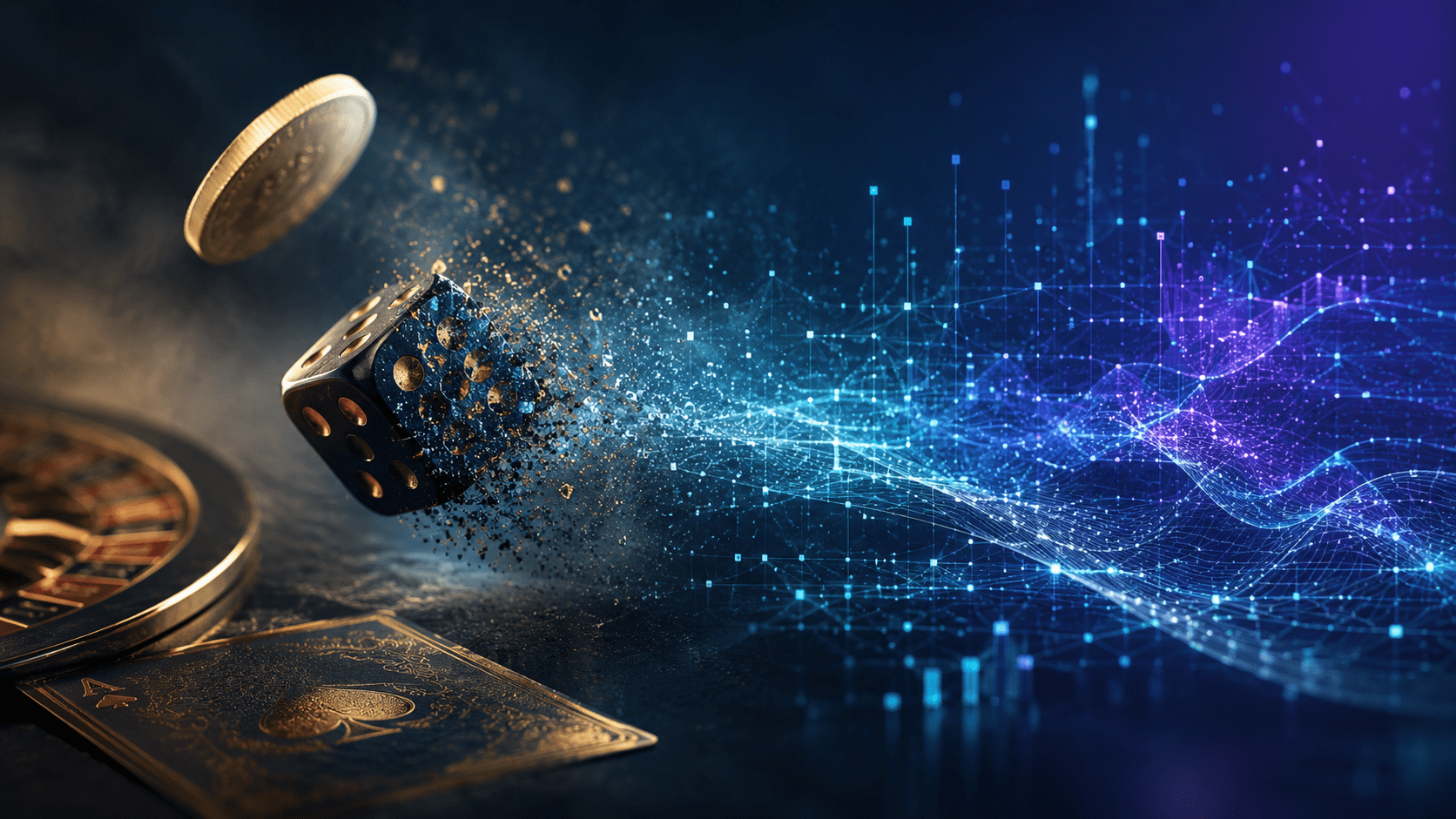
Luck has always carried a mystical quality — something unexplainable, untouchable, deeply personal. But as algorithms increasingly govern the systems where chance plays out, the very nature of luck is shifting. What once felt like cosmic randomness now emerges from pseudorandom number generators, weighted probability tables, and machine learning models. This transformation raises a fascinating question: when outcomes are engineered by code, can we still call them lucky?
How Algorithms Replaced the Coin Toss
For most of human history, randomness was physical. A rolled die, a shuffled deck, a gust of wind — these were the engines of chance. They operated beyond human control, and that unpredictability gave luck its power. People built rituals around it, wore charms, and whispered prayers to forces they couldn’t see. The digital revolution changed that foundation entirely. Today, most experiences involving chance rely on algorithms designed to simulate randomness. Pseudorandom number generators produce sequences that appear random but are actually determined by initial seed values and mathematical functions. The output looks unpredictable to the human eye, yet it follows a deterministic path invisible beneath the surface. This creates an interesting paradox: the randomness people interact with daily is manufactured, yet it still produces genuine emotional responses — excitement, disappointment, surprise.
The Architecture of Engineered Chance
Understanding how synthetic luck operates requires looking at the systems that produce it. Modern algorithms don’t simply flip a binary switch between winning and losing. They work within layered probability frameworks that account for user behavior, engagement metrics, and statistical distribution models.
Pseudorandomness and Its Boundaries
A truly random event has no pattern and no predictability. Pseudorandom systems, by contrast, use algorithms like the Mersenne Twister to generate sequences that pass statistical randomness tests while remaining reproducible if you know the seed. This distinction matters because it means every “lucky” outcome in a digital environment was technically calculable before it happened. The experience of luck persists, but its mechanical origin is entirely engineered.
Weighted Probability in Practice
Beyond basic randomness, many digital platforms use weighted probability distributions. These systems assign different likelihoods to different outcomes, creating experiences where certain results feel rare and therefore more valuable. Online platforms dedicated to chance-based entertainment, including options like Ice casino no deposit offerings, rely on certified random number generators that operate within strict regulatory frameworks. The algorithms ensure fairness while still producing the uneven distribution of outcomes that makes luck feel meaningful.
Why Synthetic Luck Still Feels Real
If algorithmic outcomes are predetermined by code, why do they still trigger the same neurological response as finding a four-leaf clover? The answer lies in how human brains process uncertainty. Neuroscience research shows that dopamine release is tied not to rewards themselves but to the unpredictability of rewards. When outcomes are uncertain from the individual’s perspective, the brain responds as though genuine randomness is at play.
This means synthetic luck works because perception matters more than mechanism. A person who doesn’t know the algorithm’s seed value experiences the outcome as truly random. The emotional architecture of luck — anticipation, surprise, elation — remains fully intact even when the underlying system is deterministic. In a practical sense, the luck is real because the experience of it is real.
Ethical Dimensions of Manufactured Randomness
Engineered chance raises important ethical considerations that extend beyond technology into philosophy and regulation. When companies design the systems that produce lucky or unlucky outcomes, they hold a form of power that traditional randomness never concentrated in anyone’s hands.
Transparency becomes crucial here. Users benefit from understanding that the randomness they encounter is algorithmic rather than cosmic. Regulatory bodies across multiple jurisdictions now require certification of random number generators to ensure outcomes aren’t manipulated. These oversight mechanisms represent society’s attempt to maintain trust in systems where luck has been industrialized. The balance between engaging experience design and honest probability disclosure remains one of the defining challenges of digital chance.
| Aspect | Natural randomness | Algorithmic randomness |
| Source | Physical phenomena (dice, weather, shuffled cards) | Pseudorandom number generators and mathematical functions |
| Predictability | Truly unpredictable | Deterministic if seed value is known |
| Reproducibility | Cannot be exactly reproduced | Fully reproducible with the same seed |
| Oversight | No centralized control | Subject to regulatory certification and auditing |
| Emotional impact | Strong sense of genuine luck | Equally strong when the mechanism is hidden from the user |
| Manipulation risk | Minimal (governed by physics) | Requires transparency and regulatory safeguards |
When the Code Becomes the Cosmos
The shift from natural randomness to algorithmic chance hasn’t diminished luck — it has transformed it. People still feel fortunate when outcomes break their way, still develop superstitions around digital interactions, and still chase the thrill of beating the odds. What has changed is the infrastructure beneath those feelings. Luck now runs on servers instead of stars, generated by mathematics instead of mystery. Yet the human relationship with uncertainty endures, proving that synthetic luck, however engineered, taps into something deeply and irreducibly human. The algorithms may write the rules, but the experience of fortune remains ours alone.