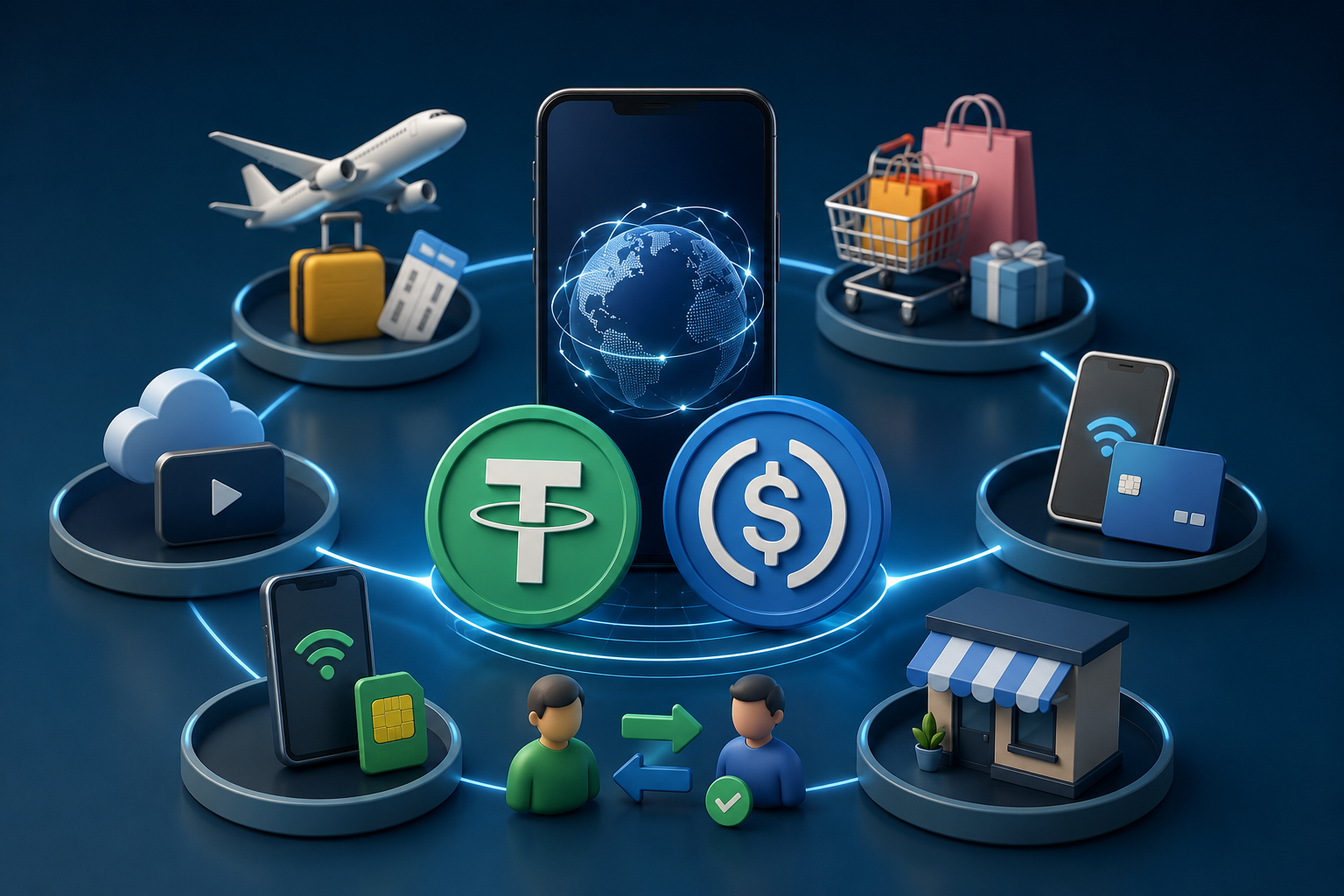
The concept of “being your own bank” has shifted from a technical experiment to a daily utility for a growing segment of global nomads and independent professionals. While Bitcoin often captures the spotlight for its price movements, stablecoins like USDT (Tether) and USDC (USD Coin) serve as the functional workhorses of the digital economy. These assets are pegged 1:1 to the US dollar, providing a buffer against the volatility that can make small-scale retail transactions difficult to price.
Current infrastructure has matured to a point where utilizing digital dollars outside the traditional fiat banking system is a practical reality. For those operating in regions with restrictive capital or for freelancers moving between borders, these assets provide a consistent unit of account that functions across different jurisdictions.
Market Context: USDT vs. USDC
Understanding the scale of these assets helps illustrate their utility. As of the current market cycle, USDT and USDC represent the vast majority of stablecoin liquidity. Traders and users typically choose between them based on liquidity needs and regulatory preferences.
| Metric (Approx. 24h) | USDT (Tether) | USDC (USD Coin) |
|---|---|---|
| Market Cap | ~$110B – $120B | ~$32B – $35B |
| Primary Use Case | Exchange Liquidity / P2P | DeFi / Institutional Transparency |
| Top Networks | Tron, Ethereum, Solana | Ethereum, Base, Solana |
Why stablecoins are suited to everyday payments
Stability is the primary driver of adoption. If a service costs $50, paying in USDT ensures both parties receive that exact value, regardless of hourly market fluctuations. This predictability has led to the development of settlement layers that bypass the slow, intermediary-heavy rails of international wire transfers.
Furthermore, the efficiency of modern blockchain networks allows a transaction to settle in seconds. This makes digital dollars practical for frequent purchases compared to traditional cross-border banking, which often levies flat fees that disproportionately impact low-value transactions.
#1 Spend USDT and USDC on gift cards and digital products
Direct merchant adoption of crypto remains fragmented, but the gift card economy serves as a massive bridge. Instead of waiting for a local supermarket or electronics retailer to integrate a crypto wallet directly, users can buy gift cards with USDT to access thousands of brands instantly. This method essentially turns a stablecoin balance into a universal key for retail.
When using platforms like CoinsBee, the process involves selecting a brand, choosing the fiat amount, and sending the equivalent USDT or USDC via a preferred network. The digital code is usually delivered immediately, allowing for the purchase of groceries, clothes, or hardware without interacting with a traditional bank account.
#2 Travel bookings
The travel industry was one of the earliest adopters of stablecoin payments. Several major booking aggregators and boutique travel agencies now accept USDT directly for flights, hotel stays, and car rentals. This is particularly useful for long-term travelers who want to avoid the dynamic currency conversion fees that banks often apply when cards are used abroad. By paying in USDC, the price seen on the screen is the final price paid, eliminating the spreads typically charged by legacy financial institutions for foreign transactions.
#3 Crypto payment cards
Physical and virtual debit cards linked to stablecoin balances have bridged the gap between digital wallets and point-of-sale terminals. These cards allow users to hold assets right up until the moment of purchase. When the card is swiped at a terminal, the service provider instantly converts the necessary amount of stablecoin into the local currency required by the merchant. While this introduces a third party into the flow, it enables the use of digital dollars at any location that accepts major card networks.
#4 Mobile phone services
For the “bankless” demographic, maintaining connectivity is a top priority. In many parts of the world, mobile data is a primary utility. USDT and USDC are now frequently used to top up prepaid SIM cards across hundreds of global carriers. This allows individuals to maintain communication lines and internet access by sending funds directly to a service provider, bypassing the need for a local bank account or a physical top-up kiosk.
#5 Online subscriptions
Streaming services, cloud storage, and professional software suites are increasingly accessible via stablecoin-funded methods. While some platforms allow direct wallet connections, many users utilize the gift card bridge or virtual cards mentioned earlier. This ensures that monthly recurring costs for essential digital tools—like VPNs, hosting, or creative software—are managed directly from a user’s digital asset balance, providing a layer of financial autonomy.
#6 P2P payments
Peer-to-peer (P2P) transfers are an organic use case for USDT and USDC. Freelancers and remote workers often prefer these assets over traditional remittance services because the fees are transparent and the funds are accessible 24/7. P2P marketplaces allow users to swap digital dollars for local cash or other assets through escrow systems, often with lower friction than traditional bank corridors.
#7 Merchant payments
There is a rise in native merchant acceptance, particularly in tech-forward hubs and emerging markets. Small businesses are increasingly displaying QR codes that support stablecoins over networks like Tron or Solana. For the merchant, this eliminates the risk of chargebacks and provides instant settlement. For the consumer, it provides a way to pay for everything from food to professional consulting services directly from a mobile wallet.
Which networks can you use for USDT payments?
Choosing the right network is the most important technical decision when using stablecoins. Not all USDT is the same; it exists on different blockchains, each with its own speed and cost structure.
- TRON (TRC-20): Currently a dominant network for USDT transfers globally. It is favored for its relatively low fees (often around $1 to $2) and high speed. Most exchanges and payment platforms support TRC-20 by default.
- SOLANA: Known for extremely low transaction costs—often a fraction of a cent—and near-instant finality. It is increasingly the network of choice for micro-payments.
- ETHEREUM (ERC-20): The most secure and widely supported network, but also the most expensive. Fees are highly variable; during periods of high congestion, a simple transfer can cost $15 or more, making it better suited for large, high-value transfers.
- LAYER 2s (Arbitrum, Optimism, Base): These sit on top of Ethereum and offer much lower fees while maintaining a connection to the Ethereum ecosystem. They are gaining traction for daily transactions as more wallets integrate them.
Key Considerations for Users
Operating with stablecoins requires a different kind of diligence than traditional banking. First, always verify the network. Sending USDT from a TRON wallet to an Ethereum address will result in a total loss of funds.
Second, consider the “slippage” or exchange rates. While these assets aim for a 1:1 peg, platforms that convert them into gift cards or fiat may apply a small spread to cover liquidity costs. It is important to compare the final checkout price against the current market rate.
Finally, regional regulations vary. Some countries have specific rules regarding the use of stablecoins for commercial payments. Users should be aware of local tax implications, as spending crypto is often treated as a “disposal of an asset” in many jurisdictions, potentially triggering capital gains obligations.
Conclusion
Using USDT and USDC today is about utilizing a functional tool for immediate utility. By shifting everyday expenses—from travel and mobile data to retail shopping—into the stablecoin ecosystem, users gain a level of financial flexibility that traditional institutions often struggle to match. As the infrastructure continues to simplify, the barrier between a digital wallet and a physical shopping cart continues to disappear.