Imagine a massive public notebook that records who sent what to whom, and many independent notekeepers check every page. That is the Bitcoin blockchain. Each page is a block. Blocks link together, so no one can quietly change an old line without everyone noticing.
Your access to funds lives in a wallet. The wallet holds a private key, which is a secret that lets you move coins. It also gives you a public address, which is safe to share.
People can send Bitcoin to your address, where only your private key can move it. If you lose that key, there is no reset button, so storage matters more than with a normal app.
New Bitcoin enters the system through mining. Powerful computers gather recent transactions, package them into a block, and compete to add that block to the notebook. The winner gets newly minted coins and the fees from those transactions. The total supply is capped at twenty-one million, which gives Bitcoin a built-in scarcity.
Sending money is simple in practice. You paste an address, choose an amount, and confirm. The transaction spreads to the network. Miners include it in a block. Wallets estimate a fee, so your transfer is picked up at a reasonable speed. For most everyday payments, it feels like sending an email that appears a few minutes later.
Everyday use cases that stick
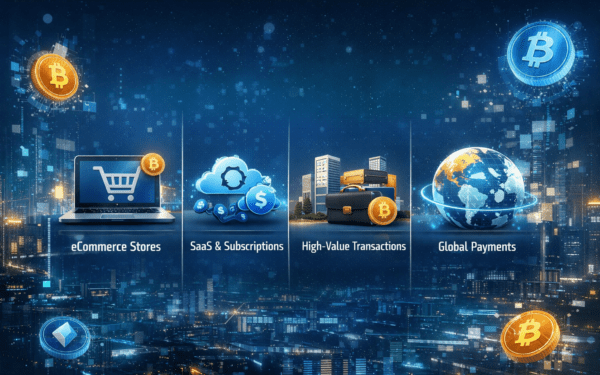
People reach for Bitcoin when banks feel slow or expensive. A parent paying school fees abroad can move value across borders without waiting days for a wire to clear.
Freelancers accept Bitcoin from clients in different countries because it settles fast and is easy to convert to local currency when needed. Shops and online services either accept BTC directly or pass it through a processor that converts it to pounds or euros at checkout, so the merchant avoids currency risk.
Readers who enjoy prize-based entertainment often look for trusted roundups that explain where to play and what to expect, especially as new platforms continue to appear online. For instance, if you’re wondering where to find new sweepstakes casinos you’ll want a guide that breaks down how these sites operate, the types of games available, and the coin-based reward systems that set them apart from traditional online casinos. Sweepstakes casinos typically use a dual-currency system — Gold Coins for standard play and Sweepstakes Coins for prize entries — allowing players to enjoy casino-style fun while staying within legal social gaming frameworks.
Reliable sites not only help users compare welcome bonuses and evaluate coin package values but also explain the legal status of sweepstakes gaming across different regions. They often highlight platform safety, redemption options, and community engagement, ensuring that players can make informed choices about where to play, how to redeem prizes, and which platforms deliver the best overall sweepstakes experience.
Gaming, prizes, and digital items
Gaming already lives online, so digital money fits the rhythm. Players top up balances, buy skins, and cash out winnings. Speed matters here. With Bitcoin, deposits can settle within minutes, and withdrawals do not sit in a queue for days. That tempo keeps live events smooth and helps players manage time.
Finality is another reason operators like BTC. When a transfer confirms, it is not reversible. Fewer chargebacks mean simpler account handling and fewer disputes. Players feel that there is less friction during payouts.
There is also a push toward provably fair systems. In these, a cryptographic proof shows that the outcome came from the rules that were published in advance. You still have the same odds, but you can verify the process. The culture around Bitcoin and open verification overlaps with this idea, which explains why these communities often meet.
Ownership is changing, too. Some projects let you keep digital items in a wallet that you control, rather than inside a closed account. That idea is early, but the appeal is clear. If you own a token that represents a skin or a pass, you can trade it, hold it, or bring it to other experiences if they support it.
What the next few years may look like
The big theme is scale without complexity. Payment channels let people send tiny amounts instantly and settle the result later on the main chain.
For a user, it feels like tapping a contactless card. For a creator, it enables tips, pay per article, and streamed payments for time-based services. Games can reward actions with tiny amounts that move freely.
Another theme is blending with the tools people already use. Banking apps and fintech platforms are adding smooth bridges between regular accounts and Bitcoin wallets.
Some payroll firms already offer a slice of salary in BTC by default. Point of sale systems can quote in local currency while settling in Bitcoin behind the scenes.
718