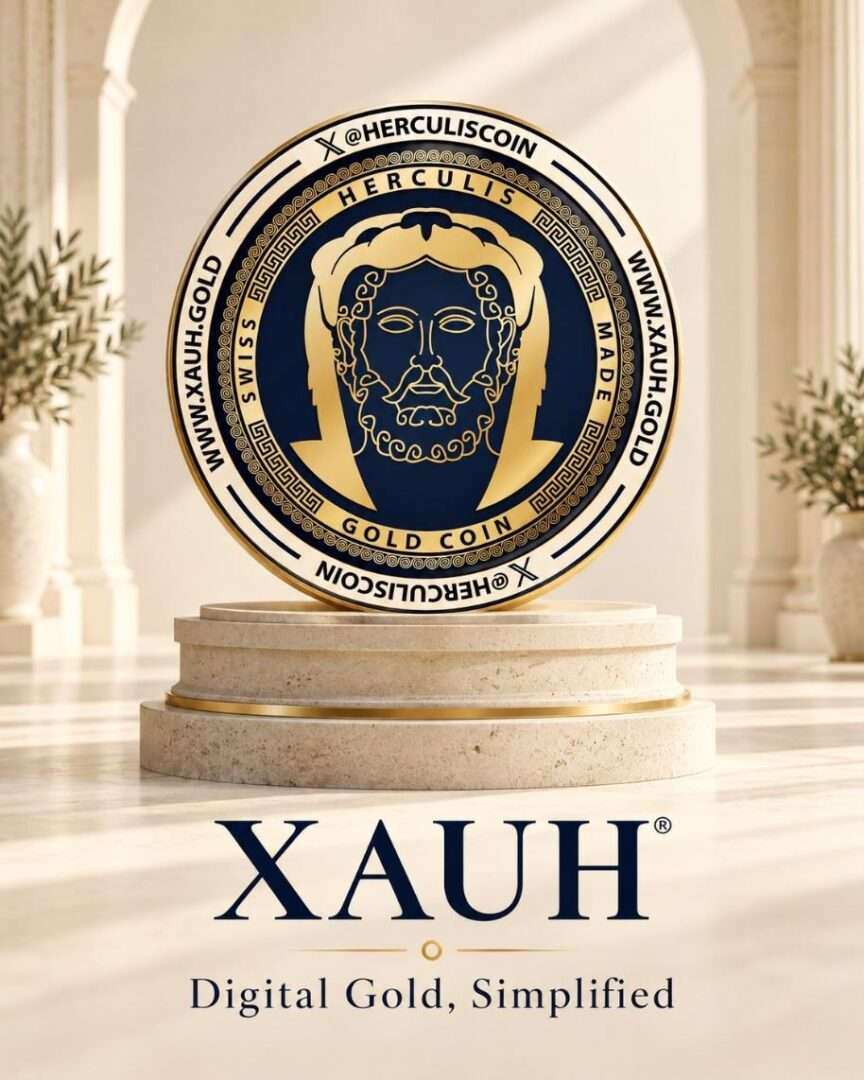
XAUH coin traces back to a private banker who spent years working in wealth management before relocating to Switzerland, the traditional seat of the industry. There, in partnership with a local Swiss expert, he founded the first entity of what would become the Herculis Group in 2009. Sixteen years and six companies later — spanning asset management, fiduciary services, gold trading, and vault storage — that group launched its first tokenization project: a gold-backed cryptocurrency called Herculis Gold Coin, or XAUH gold, designed to let smaller investors buy fractions of Swiss bullion rather than needing to purchase a bar outright. The XAUH token represents one attempt among several now underway to bring physical gold ownership onto a blockchain, at a smaller unit size than most competitors offer.
At a Glance
XAUH is designed to be a straightforward instrument once its structure is understood. Here’s what defines it:
- A gold-backed token representing direct, verifiable ownership of physical bullion, not a claim on a paper contract
- Backed one-to-one by Swiss LBMA 999.9 fine gold, making it a form of tokenized gold at a ratio of one gram per XAUH gold token
- Issued as XAUH digital gold, a native asset on the TON blockchain using the JAMTON layer-2 protocol, which also draws on Polkadot’s security model
- Redeemable for physical bullion starting at 500 XAUH Herculis tokens, equivalent to 500 grams of gold, with delivery available worldwide
XAUH Digital Gold and the Sixteen Years That Preceded It
XAUH digital gold did not emerge from a startup sprint. It came out of a Swiss financial group with a much older, slower history.
Herculis Group now operates five offices in Switzerland and one in Liechtenstein, built up gradually rather than all at once. The asset management and fiduciary sides handle the administration and accounting for wealthy clients’ structures. A separate entity focuses purely on physical gold trading. Another manages vault storage, holding both bullion and fine art on behalf of clients and the group itself.
The sixth and newest entity, created only last year, exists solely to turn those existing gold holdings into blockchain-based assets. Its first product was XAUH gold. It was designed from the outset as a gold-backed token rather than a synthetic or paper-based instrument, with each unit tied to allocated bullion sitting in a Swiss vault.
The founder has said he first grew interested in tokenizing gold as early as 2016, during the wave of initial coin offerings, but did not find a workable technical partner until meeting the team behind Jamton in late 2024. That eight-year gap between the idea and its execution reflects less a lack of ambition than the difficulty of finding a blockchain partner capable of building tokenized gold properly, and an audience willing to trust a gold-backed cryptocurrency issued from Panama rather than a household financial center.
XAUH and the Gold Sitting Behind It
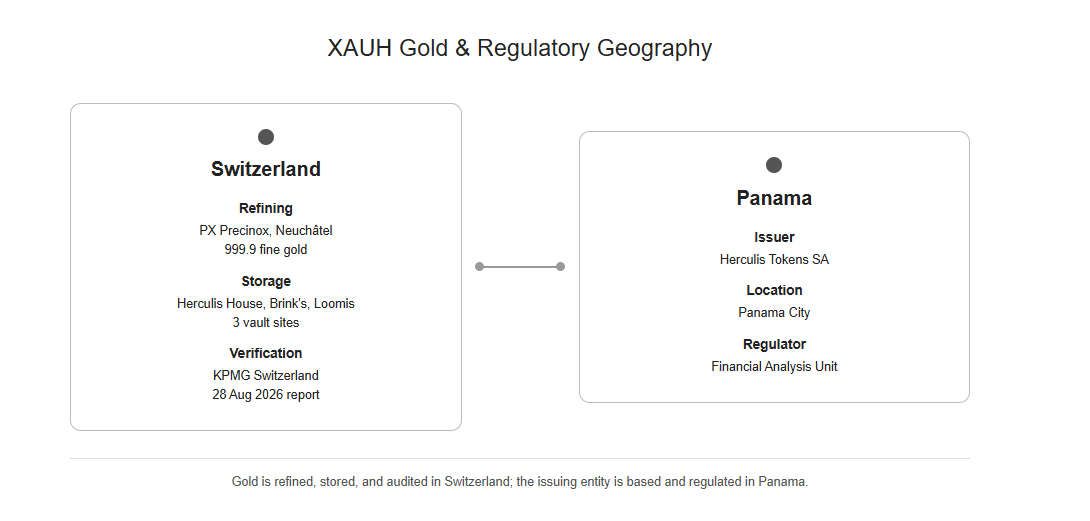
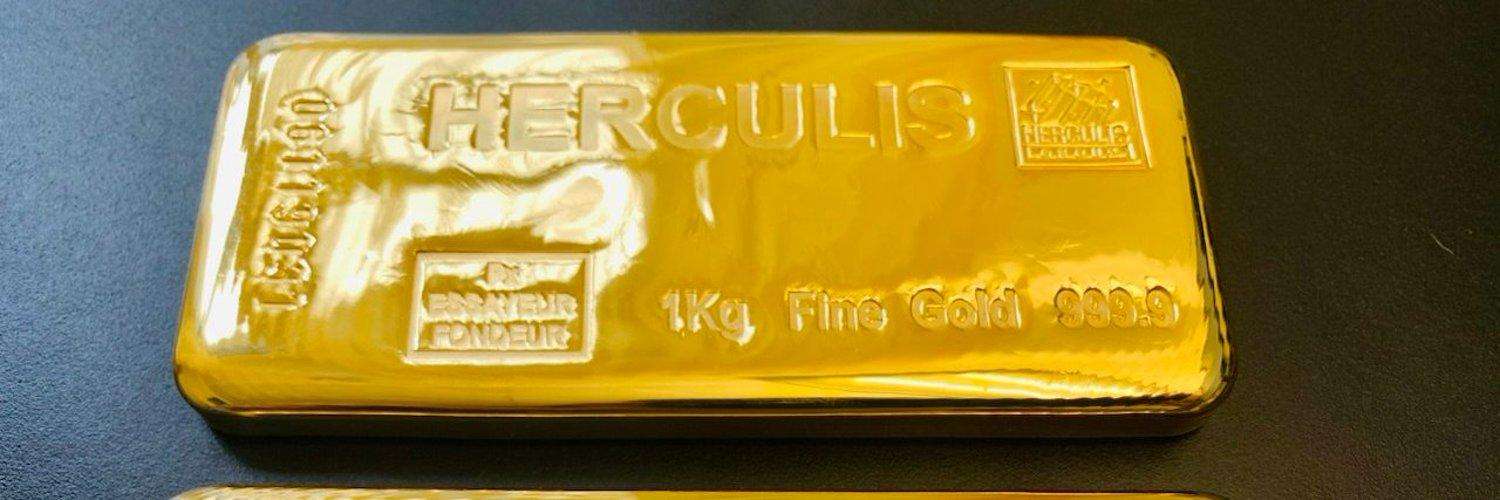
Each XAUH represents one gram of Swiss LBMA 999.9 fine gold, making it a gold-backed token in the most literal sense rather than a synthetic proxy. As XAUH gold, it is refined by PX Precinox in Neuchâtel and held in allocated form, distinguishing it from pooled or unallocated digital gold products.
The bullion behind this asset-backed token sits in three separate locations: Herculis House, the group’s own storage facility, plus vaults operated by Brink’s and Loomis. Splitting reserves across three sites is deliberate, the founder has said, rather than concentrating an entire supply of tokenized gold in one vault.
Herculis publishes independent verification confirming that grams deposited match the number of XAUH RWA tokens in circulation. Photographs of individual bars, alongside a Chainlink-based proof-of-reserve system, let holders check the backing behind their gold-backed cryptocurrency directly, rather than relying on the company’s word alone. The verification is conducted by KPMG’s Swiss office through an agreed-upon-procedures engagement, dated 28 August 2026, a detail Herculis has pointed to as a differentiator from competitors whose reserve reports tend to describe findings only in general terms.
A bankruptcy-remoteness clause covers this XAUH token specifically: bullion backing it would not form part of any insolvency estate, remaining reserved for XAUH Herculis token holders under the terms published in the whitepaper.
XAUH Coin Network Has Grown Beyond TON and Polkadot
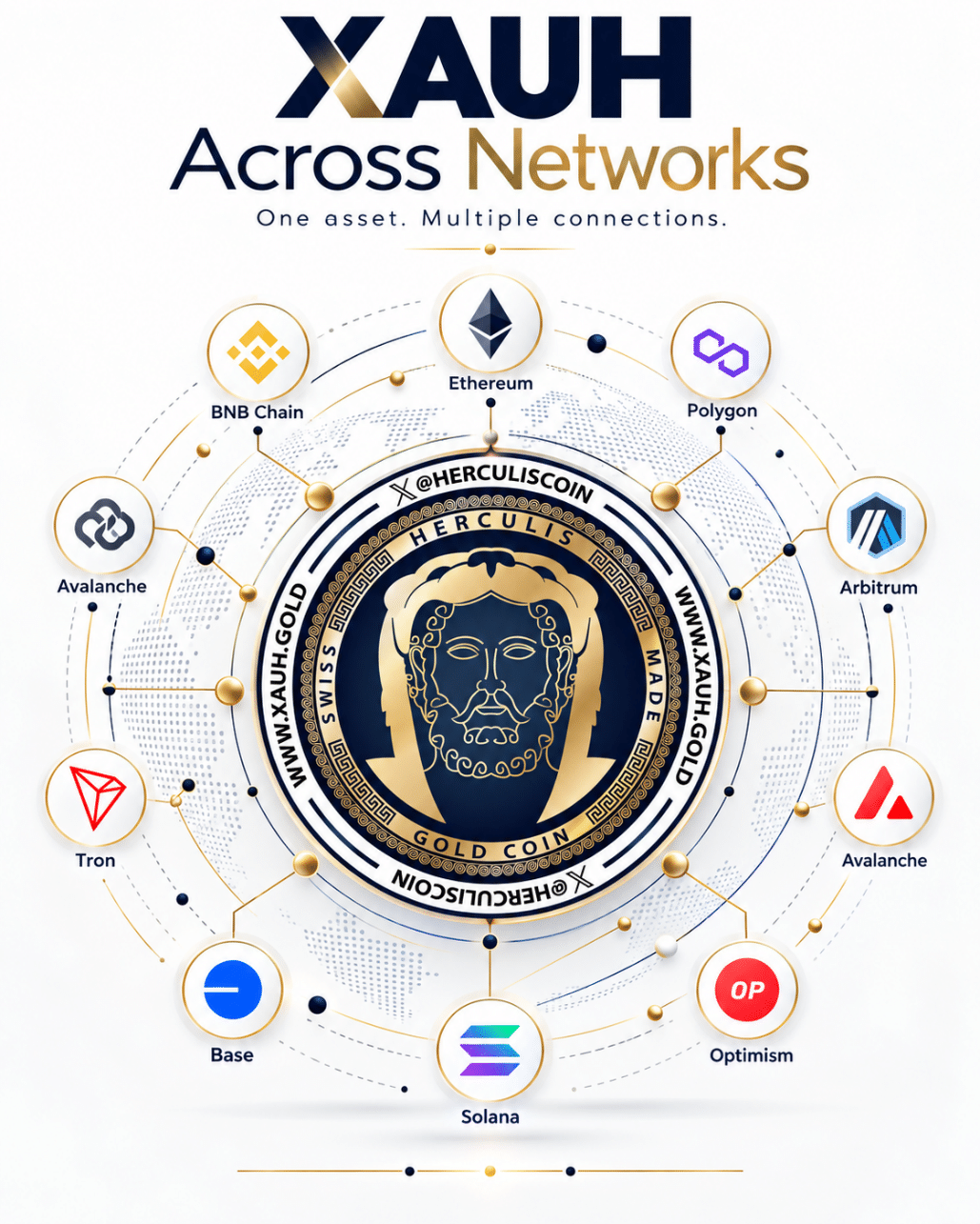
XAUH coin was initially issued as a native asset on Jamton, a Layer 2 protocol connecting TON and Polkadot. XAUH’s footprint has since broadened: contracts are now also identified on Ethereum and TRON. As XAUH digital gold, it draws on TON’s large Telegram-linked user base while also reaching Ethereum-based decentralized infrastructure, making this gold-backed token part of the wider RWA (real world assets) category now expanding across multiple ecosystems.
XAUH’s presence across TON, Ethereum and TRON gives holders access to a wider set of wallets, exchanges and liquidity than a single-network gold-backed cryptocurrency product would offer. The same multi-chain reach extends to every XAUH RWA asset-backed token unit minted through the protocol.
In practice, the appeal for everyday users is cost. Transactions in XAUH gold cost a few cents, compared with the ten, twenty, or fifty dollars that gas fees on Ethereum can reach — a comparison the founder has drawn directly against gold-backed cryptocurrency rivals built on that older chain. Minting new XAUH Herculis tokens happens when the company deposits verified gold into custody; redemption reverses the process, burning tokenized gold and releasing physical bullion once the required threshold is met. Each step in that cycle keeps the circulating supply of this gold-backed token tied one-to-one to grams actually held in Swiss vaults.
XAUH RWA Bets on Telegram’s Built-In Audience
The choice to build XAUH digital gold on TON was, by the founder’s own account, a choice to build on Telegram. TON wallets now come pre-installed for roughly 100 million Telegram users, up from about 50 million a year earlier, and the founder has cited that growth as the main reason Jamton was chosen for this XAUH RWA project.
That audience matters because of who uses Telegram most heavily. The founder points to user data skewed toward India, Indonesia, Brazil, Egypt, Vietnam, and Turkey — markets he calls the “global south,” where buying even a gram of gold-backed cryptocurrency at a street shop can carry a fifteen percent markup over spot price. A gold-backed token accessible at fractional sizes, he argues, solves a problem those buyers actually have.
Early marketing has relied on AdsGram, a Telegram-native ad tool, to direct users toward trading venues. The pitch leans on cost: an XAUH coin transaction costs a few cents, against the ten to fifty dollars in gas fees rival tokenized gold products on Ethereum can require.
XAUH Herculis Tokens Have More Than One Job
Beyond simply holding value, XAUH digital gold is built to move through several different uses, some live and some still in development:
- Direct peer-to-peer transfers inside Telegram, sending XAUH gold to another wallet for a few cents in fees
- Trading on decentralized and centralized exchanges, including STON.fi, Uniswap V2, BTSE, and Biconomy.com, where this RWA (real world assets) token can be swapped for USDT or other cryptocurrencies
- Profit-sharing through a decentralized exchange staking pool
- Interest-bearing deposits through Biconomy.com, letting holders earn a return on gold-backed cryptocurrency without selling it
- Planned cooperation with Morpho, allowing holders to borrow against their gold-backed token within decentralized lending markets rather than liquidating it
- Planned cooperation with Frankencoin, the Swiss stablecoin, giving holders a route between tokenized gold and a Swiss franc–pegged digital asset within the same ecosystem
XAUH Gold: In the Founder’s Own Terms
Asked about the profit-sharing model over conventional interest, the founder was direct: participants in this XAUH RWA arrangement share in returns rather than earning interest. He frames the pitch for this asset-backed token as a full cycle — invest, earn, borrow against holdings if needed, then eventually spend the gold “like normal currency” for everyday purchases, closing the loop from digital gold back to real-world spending power.
Herculis Gold Coin Versus the Bigger Names in Tokenized Gold
The largest gold-backed cryptocurrency competitors tokenize against 400-ounce bars, the standard institutional unit weighing roughly 12.4 kilograms. Minting or redeeming against them requires assembling 400 tokens, worth close to 1.5 million dollars at current prices. XAUH RWA takes a different minimum: 500 grams, or 500 tokens, worth roughly 60,000 dollars, a threshold aimed at a smaller class of buyer entirely.
Purchase minimums diverge even further below that. A single digital gold coin from Herculis can be bought in increments as small as one-hundredth of a gram, worth roughly a dollar, compared with a full ETF share running several hundred dollars, or a Comex futures contract requiring around 320,000 dollars of exposure. That gap is central to how the founder positions this asset-backed token: not as competition for institutional buyers, but as an alternative for people those products were never built to serve.
Settlement speed is another point of separation. Gold ETFs and 400-ounce bars typically settle on a two-day cycle; this XAUH digital gold settles close to instantly on-chain. Custody costs also diverge: major gold ETFs charge annual fees in the range of 19 to 40 basis points, and unallocated gold products often carry ongoing fees too, whereas XAUH gold carries no recurring custody charge, only a one-time tokenization fee.
Regulatory footing differs as well. XAUH operates under Panama’s Financial Analysis Unit, a narrower regime than the SEC and CFTC oversight that governs major ETFs and futures contracts in the United States.
XAUH Still Carries the Risks of a Young Project
Circulating supply remains small. As of the most recent published figures, around 15.5 kilograms of gold had been tokenized into XAUH gold, part of a wider category of RWA (real world assets) that remains thinly traded at this stage. That figure is a fraction of the reserves the company says it holds and could mint later, and it means liquidity and trading depth are still unproven at scale for this XAUH digital gold product.
Regulatory oversight also sits outside the frameworks investors may expect. This gold-backed cryptocurrency operates under Panama’s Financial Analysis Unit rather than a regulator like the SEC or CFTC, and the XAUH token carries no legal-tender status anywhere, meaning it cannot be used to settle debts or taxes the way a national currency can.
Redemption isn’t free either: fees run 1 percent for withdrawals of a kilogram or more, and 3 percent below that, plus shipping costs the company doesn’t cover. The whitepaper includes standard forward-looking disclaimers, and general custody and blockchain risks apply to any tokenized gold product, however it’s structured.
XAUH Token Purchases Run Through a Handful of Venues
Buying starts with a Telegram wallet, activated inside the app, or an account on a supported exchange. This XAUH digital gold trades on BTSE, Biconomy.com, STON.fi, and Uniswap V2, covering both centralized and on-chain routes to XAUH gold. Each venue handles settlement slightly differently, but all three connect back to the same underlying reserve of bullion held in Swiss vaults.
Buying directly from Herculis for the primary market requires KYC verification first, since this XAUH RWA process ties to the company’s own pipeline. Secondary purchases through exchanges follow each platform’s own terms, and don’t require going through Herculis directly at all.
Storage is simple once a wallet exists: this asset-backed token sits like any crypto holding, with no separate vault or account needed on the holder’s side. Redeeming this tokenized gold for physical bullion requires at least 500 in XAUH token, equivalent to 500 grams, with global delivery, though fees don’t cover shipping.
FAQ
1. What is XAUH?
XAUH is a token representing ownership of Swiss-stored physical gold. As XAUH gold, each unit ties to one gram of allocated bullion.
2. How does XAUH gold differ from stablecoins?
Stablecoins like USDT are pegged to fiat, not a commodity. XAUH gold ties each unit to bullion, unlike digital gold that merely tracks a price.
3. How is this RWA (real world assets) coin different from other gold tokens?
Competing tokens often rest on paper claims. XAUH Herculis guarantees redemption for bullion, central to how this gold-backed token is marketed.
4. What fees apply to XAUH coin?
A one-time 0.3 percent tokenization fee applies as this asset-backed token is minted. Ongoing fees depend on exchange spreads.
5. How does redemption work?
Holders of this asset-backed token need 500 XAUH to redeem, with fees of 1 to 3 percent. XAUH carries no recurring custody charge while held as digital gold.
6. Is XAUH regulated?
Herculis Tokens SA reports to Panama’s Financial Analysis Unit, unlike some RWA (real world assets) products under SEC or CFTC oversight.
7. Can XAUH be traded around the clock?
Yes. This RWA (real world assets) trades on DEX and CEX venues at any hour, offering trading availability that physical gold markets, with their fixed dealer hours, generally can’t match.
8. Is the digital gold from Herculis divisible into small amounts?
Yes. XAUH gold can be bought in increments as small as one-hundredth of a gram, a scale most gold-backed instruments don’t offer.
Conclusion
The digital gold from Herculis suits people priced out of buying gold the conventional way, rather than institutional investors already served by ETFs or 400-ounce bars. Its main appeal is fractional ownership of XAUH digital gold at low fees, alongside settlement most physical gold markets can’t match. As an asset-backed token, XAUH gold ties value directly to bullion rather than a synthetic contract. The main caveat is scale: circulating supply remains thin, and this RWA (real world assets) sits under a narrower regulatory regime than most RWA (real world assets) listed on major exchanges, a trade-off worth weighing before treating this digital gold as a core holding.