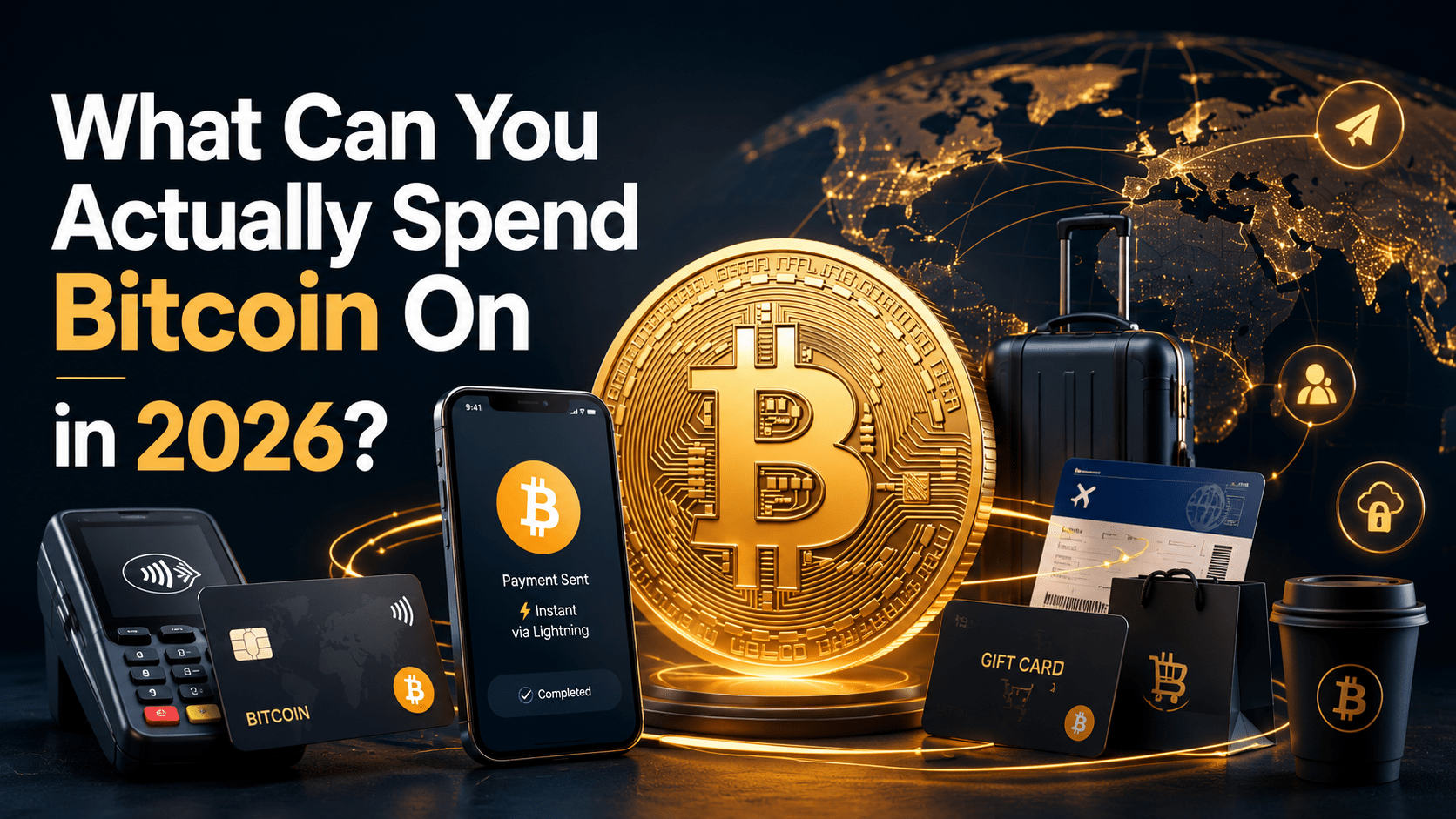
For something invented as electronic cash, Bitcoin gets spent surprisingly rarely. Most people who own it treat it the way they’d treat a stock or a gold bar: something you buy, watch, and hope appreciates, not something you hand over at a checkout. The 2008 whitepaper imagined peer-to-peer payments. Reality turned Bitcoin into a savings instrument most holders are reluctant to part with, partly on principle and partly because nobody wants to be the person who bought pizza for what later became a small fortune.
Still, the old line that “you can’t actually buy anything with it” has aged badly. Three things shifted the math: the Lightning Network made small payments fast and nearly free, crypto debit cards quietly turned BTC into something you can spend anywhere Visa works, and a long list of platforms started taking it directly because their customers asked. Online gambling was one of the first to do so; depositing Bitcoin at an online casino has been routine since long before any mainstream retailer came around. The rest of the list runs from travel to groceries, so here’s where spending Bitcoin in 2026 genuinely makes sense, and where it’s still more trouble than it’s worth.
The everyday layer: cards and gift cards
The honest truth about most “Bitcoin spending” is that it isn’t really spending Bitcoin. It’s converting it at the moment of purchase. Crypto debit cards from the likes of Coinbase and Crypto.com pull from your balance, sell the BTC instantly, and settle the transaction in dollars or euros on the merchant’s end. The shop sees an ordinary card payment. You see a slightly smaller crypto balance. It works for groceries, fuel, a coffee, anything that takes a card, which is to say almost everywhere.
Gift cards cover the gap for places that don’t. Services like Bitrefill let you buy credit for Amazon, Uber, hotel chains, and hundreds of retailers using BTC or Lightning, no card required. It’s clunkier than tapping a phone, but it’s the closest thing to spending Bitcoin directly at a mainstream store, and it skips the conversion step entirely if the retailer honors the balance.
Travel and big-ticket purchases
Travel is one of the few sectors that took crypto seriously and stuck with it. Travala, the largest crypto-native booking platform, accepts Bitcoin for flights and hotels worldwide, and it isn’t alone: a handful of airlines and agencies take BTC directly or through a payment processor. The logic fits. Travel purchases are large, often international, and the buyer is frequently someone already comfortable holding crypto.
At the very top end, the picture gets thinner but more interesting. Cars, watches, and the occasional property listing show up priced in Bitcoin, usually through a dealer happy to convert on the spot. These make headlines more than they make sense (a six-figure purchase with an asset that can swing five percent overnight is a nerve-wracking way to buy a house), but the rails exist if you want them.
Gaming and online betting
This is one of the largest real-money use cases for Bitcoin, and it rarely shows up in adoption write-ups because it’s slightly unfashionable to mention. Offshore casinos and poker rooms, especially the US-facing ones cut off from the banking system since 2006, run almost entirely on crypto, and Bitcoin is the one deposit method every single one of them accepts. Fund an account this way and there are no declined cards, no bank sitting on your money for a “review,” and nothing on your statement.
The mechanics aren’t quite frictionless, though. A standard transfer can take up to an hour to confirm and cost anywhere from a dollar to $50 when the network is busy, which is why the sites worth using are the ones that support the Lightning Network, where a deposit lands in seconds for less than a cent. There’s also a trap newcomers tend to learn the hard way: withdraw your winnings to your own wallet first and move them on from there, because exchanges like Coinbase and Kraken will sometimes flag or freeze a transfer that arrives straight from a gambling site.
Sending money across borders
If Bitcoin has a killer app outside of speculation, this might be it. Sending money home through a bank or a traditional transfer service is slow and quietly expensive. The World Bank’s Remittance Prices Worldwide data puts the global average cost of a transfer above six percent, and banks routinely charge more than double that. A Lightning payment settles in seconds for a fraction of a cent, regardless of which two countries sit at either end.
That gap is why Bitcoin remittances took hold fastest in places where the alternative hurts most. El Salvador made BTC legal tender back in 2021, and across parts of Latin America, Africa, and Southeast Asia, crypto rails now move real money between real people rather than just between trading desks. The catch is the last mile: someone on the receiving end still has to turn BTC into local currency, and that’s only painless where exchanges and cash-out points already exist.
Digital services and privacy tools
There’s a cluster of online services that have accepted Bitcoin for years, largely because their customers would rather not hand a card number to a third party. A number of VPN providers, privacy-focused email services, web hosts, and domain registrars take BTC directly. If you’re buying a VPN specifically to shrink your digital footprint, paying with a credit card rather defeats the point, and Bitcoin (better still, a payment over Lightning) closes that loop.
Tipping, donations, and the small stuff
Lightning quietly made Bitcoin viable for tiny amounts, which on-chain fees had rendered absurd for years. Tipping a writer a few cents, “zapping” a post on social platforms built around the protocol, or dropping a micro-payment to read an article all simply work now. Charities were early adopters too. A long list of nonprofits accept crypto donations, often because a donor wants to give appreciated BTC without selling it first and triggering a tax bill in the process. Which brings us to the part nobody enjoys.
The catch nobody likes: tax and volatility
Here’s the structural reason most people still don’t spend their Bitcoin. In the United States, the IRS treats crypto as property rather than currency, which means spending it counts as a taxable disposal. Buy a coffee with BTC that’s gone up since you acquired it and you’ve technically realized a capital gain on the difference, with all the record-keeping that implies. Most other countries treat it similarly. The crypto debit cards make this worse, not better, because every single tap is a sale.
Then there’s volatility. Spending an asset that might be worth ten percent more next week is psychologically painful, and it’s the biggest single reason stablecoins have eaten into Bitcoin’s payment use. For day-to-day spending, a dollar-pegged token sidesteps both the tax headache and the price swings. Bitcoin’s role as money is real, but in 2026 it’s increasingly a high-conviction choice rather than a practical default.
The bottom line
You can spend Bitcoin on far more than the skeptics admit: travel, gift cards for nearly any store, online gaming, cross-border transfers, privacy services, and yes, a coffee if you really want one. Whether you should is a different question, and the answer usually comes down to whether you’d rather hold the asset or use it. For most people, most of the time, the rest of the crypto market — stablecoins especially — has quietly become the more sensible thing to actually spend. Bitcoin stays the one everyone wants to keep.