Every business that takes payments has to decide which methods to offer at checkout and what each one will cost to run. While card payments continue to be the primary choice for most consumers and bank transfers dominate higher-value B2B transactions, an increasing demographic prefers paying with digital assets.
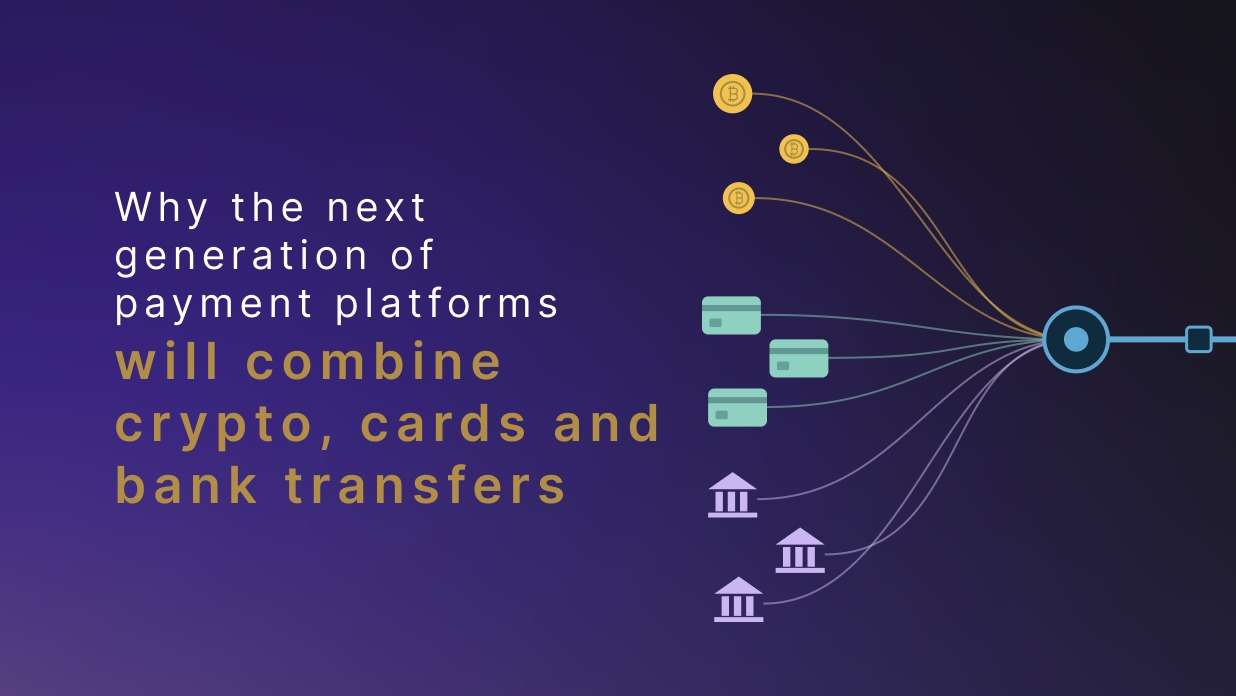
According to the latest numbers from Henley & Partners, almost 800 million of us now hold digital assets in some form and amount. Businesses that want to accept crypto payments alongside credit cards and traditional bank transfers often end up navigating disparate vendors, individual contracts, and separate reconciliation workflows for each payment channel. But change is afoot. The next generation of payment platforms is already bypassing that trade-off by combining crypto, cards and bank transfers on a single infrastructure.
This innovation is driven by customers who expect to pay in whichever way suits them, by the chargebacks, compliance costs and reconciliation work that pile up each time a business adds another provider, and by blockchain infrastructure, whose near-instant, borderless transfers, 24/7 availability, lower fees and predictable settlement make it the natural layer to unite all three methods.
Customers are choosing how they pay, and their choices keep multiplying
Payment preference is personal, and it varies by customer, market and purchase. A shopper buying a pair of sneakers will most likely reach for a card or a digital wallet. A company settling a supplier invoice will often prefer a bank transfer, particularly in Europe, where the EU's Instant Payments Regulation now requires banks to offer instant euro transfers. A long-term Bitcoin or stablecoin holder may want to pivot some of their assets into something more tangible.
But most importantly, the focus is now on that same customer being able to move between all three. Research from the Baymard Institute found that 9% of shoppers who abandoned an online purchase did so because their preferred payment method was not available. That risk grows for businesses selling internationally, because the most popular way to pay in one country can be a minority choice in the next.
The decision facing businesses is how to accept crypto payments, cards and bank transfers through a single setup. Customers are not likely to change their preferences to suit a merchant. And as such, a checkout that fails to serve them will be inadvertently handing business over to the competition. The merchants that do manage to align with expanding customer demand will be those that are able to say yes to every customer, however they choose to pay, without taking on a new provider each time.
More payment rails, more problems?
Cards are usually the first payment method a business adds. But whilst card payments do expand reach, they also come with some hefty obligations. First of all, there are interchange, assessment and network fees to pay, which are often bundled into one opaque charge that can reach up to 4% of the transaction value. Then, merchants also carry chargeback liability, meaning a customer can reverse a payment months after the goods have shipped. Mastercard expects chargebacks to reach 324 million a year worldwide by 2028. And, they must meet PCI-DSS security standards and pay for fraud screening, costs that mount quickly according to LexisNexis Risk Solutions, which estimates each dollar lost to fraud incurs $4.61 in total expenses for U.S. retailers.
Bank transfers are another kettle of fish. Each banking or open banking partner has its own onboarding process, fee structure, reporting format and settlement timeline. Once several providers are in place, finance teams have to match incoming funds across dashboards that were never designed to work together, and a payment that arrives late or incomplete can hold up the whole month-end close.
Adding crypto as a standalone option raises other concerns. Many businesses are wary of holding digital assets whose value can move sharply between payment and conversion, and few want to take on wallet management, custody or the compliance checks that crypto transactions require. Each of these overheads grows with every provider a business adds. However, the next generation of payment platforms seeks to reverse that pattern by offering several ways to pay through one single infrastructure, one agreement and one settlement process.
The infrastructure behind flexible payments
Blockchain rails are what make that single infrastructure possible, and the reason why lies in how they settle. Once an on-chain payment is confirmed, it is final, so a merchant receiving it faces zero risk of the reversals that make card acceptance so costly. That finality, paired with automatic conversion into fiat, gives a payment platform one predictable settlement layer for every payment it processes.
ForumPay is built around this model. Customers can pay with Visa, Mastercard, Apple Pay or Google Pay, or by bank transfer in the EU, UK, Canada and other selected jurisdictions, and every payment reaches the merchant through a single ForumPay account. Each one is settled in fiat or stablecoin according to the merchant's preferences, and the merchant receives exactly the amount invoiced. If a customer is billed $100, $100 arrives in their chosen account on the next business day.
Merchants can offer card payments without registering as a card acceptance business, which means no chargeback liability and no PCI-DSS compliance to fund. Any additional card and bank transfer costs can also be passed onto the payer, so the merchant pays only its standard ForumPay fee, a single all-in-one fee with no setup or ongoing charges.
The same infrastructure gives businesses control over how they accept crypto payments and what happens next. Merchants are able to accept any trusted cryptocurrency or stablecoin and see their automated conversion reflected on the Dashboard. They can send payouts and refunds from the same account on a recurring schedule or manually. And, payment providers and platforms can offer all features and functionality to their own merchants through ForumPay Embedded or the company’s hosted white-label integration model.
The payment platforms of the future will likely be judged based on two key metrics: offering customers a broad range of payment options while minimizing the expense to the merchant.