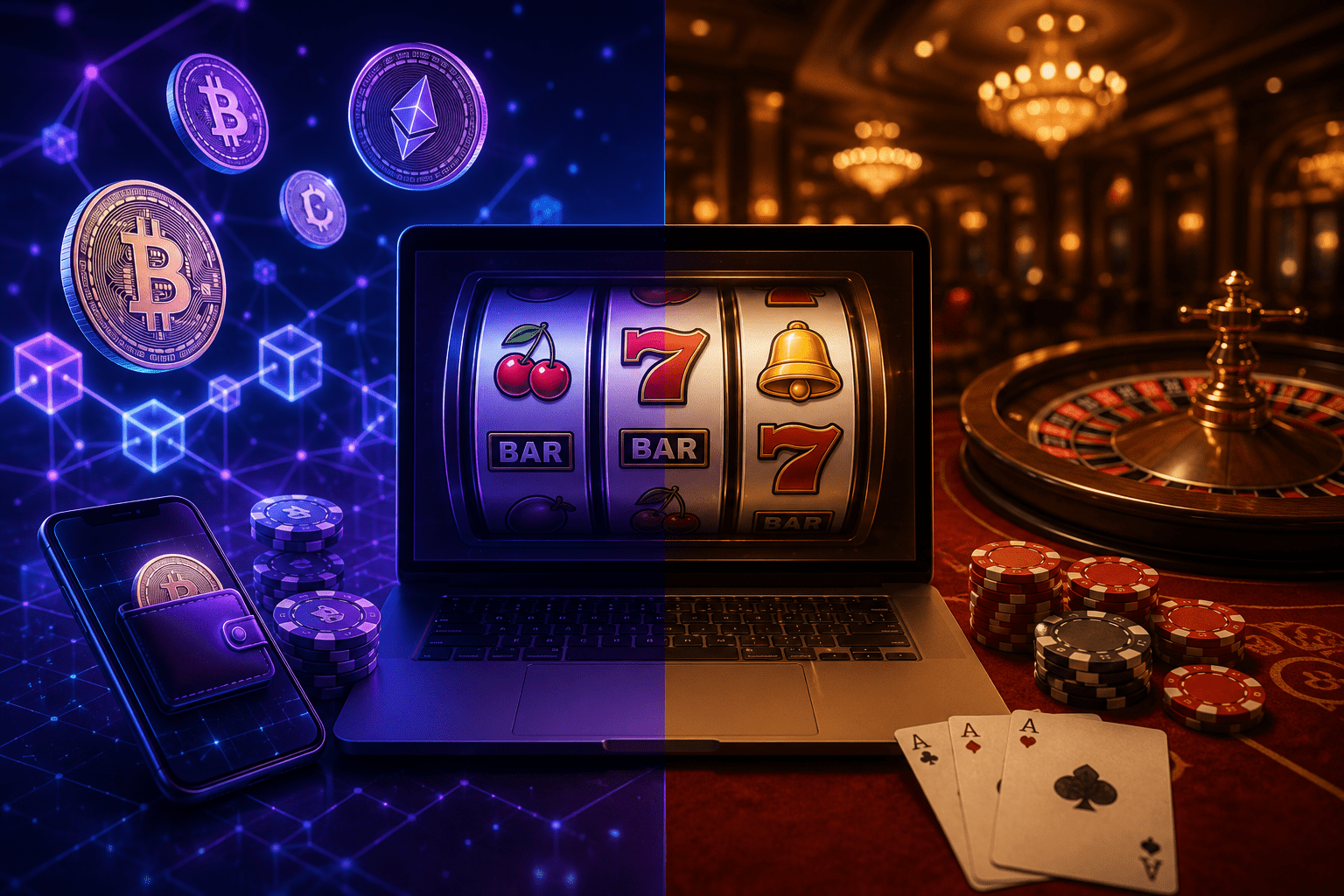
Spend ten minutes on the marketing page of any new Web3 casino and you can fill a bingo card: decentralized, trustless, provably fair, powered by smart contracts. Then log in. A grid of slot tiles pushing whatever’s trending. Blackjack and roulette with the rules untouched. A live dealer streaming from a physical studio somewhere. Take away the wallet connection and the token balance and you’re looking at an interface any online casino player of the past twenty years could navigate blindfolded, which is a strange look for a product category that markets itself as a clean break from everything before it.
This isn’t laziness. It’s one of the most deliberately conservative engineering decisions in modern digital gambling, and it says a great deal about what these products actually run on. Less the blockchain, more the psychology underneath it.
The blueprint of familiarity
Pull a typical crypto casino apart and the inheritance shows in every component. The slot libraries run the same mathematical models the traditional industry spent three decades refining: weighted reels, fixed symbol distributions, return-to-player percentages tuned so the house edge holds steady over volume. Table games arrive unmodified because they have no other option. Blackjack and roulette are centuries-old rule sets, and users would read any variation as an attempt at rigging rather than innovation. Even the live dealer product, the piece that feels most contemporary, is a format traditional platforms standardized back in the 2010s, camera crews and all. Same story with onboarding: tiered welcome structures, progress bars, lobbies that surface trending titles. All of it was settled by user testing years before anyone had mined a block.
What’s actually new is settlement. Balances get denominated in Bitcoin or a stablecoin instead of dollars, and withdrawals move on-chain rather than through card rails. That’s the innovation, more or less in full, and to be fair it’s not nothing. Faster withdrawals and self-custody matter to plenty of users. But everything the player sees, touches and responds to predates the chain entirely.
Masking the math
The deeper inheritance is psychological. Casinos worked out generations ago that abstraction lowers spending friction. Chips never feel quite like money. A token balance feels even less like it, with volatility adding a second mental conversion between the number on screen and the rent.
Advocates keep pitching the blockchain as a rupture with the gambling status quo, but under the hood the story is careful cloning, not reinvention. The slot mechanics, math models and VIP retention ladders running on decentralized rails are the same frameworks perfected by traditional online casinos over the last thirty years, down to the grid lobbies and the near-miss animations. Nobody copied that blueprint out of admiration. It got copied because it demonstrably maximizes retention and stabilizes the house edge, and no amount of cryptography changes what human attention does when a reel stops one symbol short.
Where the two worlds actually part ways is oversight. In licensed markets, regulators constrain exactly these hooks. The UK Gambling Commission’s technical standard on random outcomes demands demonstrably random results and bans games that manufacture fake near-misses or adapt payouts to an individual’s history. On unregulated chains, the same machinery runs with no referee at all. That makes “provably fair” a much narrower promise than it sounds. The RNG may be verifiable. The design wrapped around it answers to nobody.
Old physics, new wrapper
Which leaves a fairly unromantic conclusion for a sector that loves a manifesto. Crypto gambling didn’t grow because it invented new mechanics. It grew because it wrapped old, thoroughly tested casino physics in a modern financial skin, then in many cases moved the whole package further from regulation than the originals it copied so carefully. The token is new. The person holding it responds to the same loops people always have.