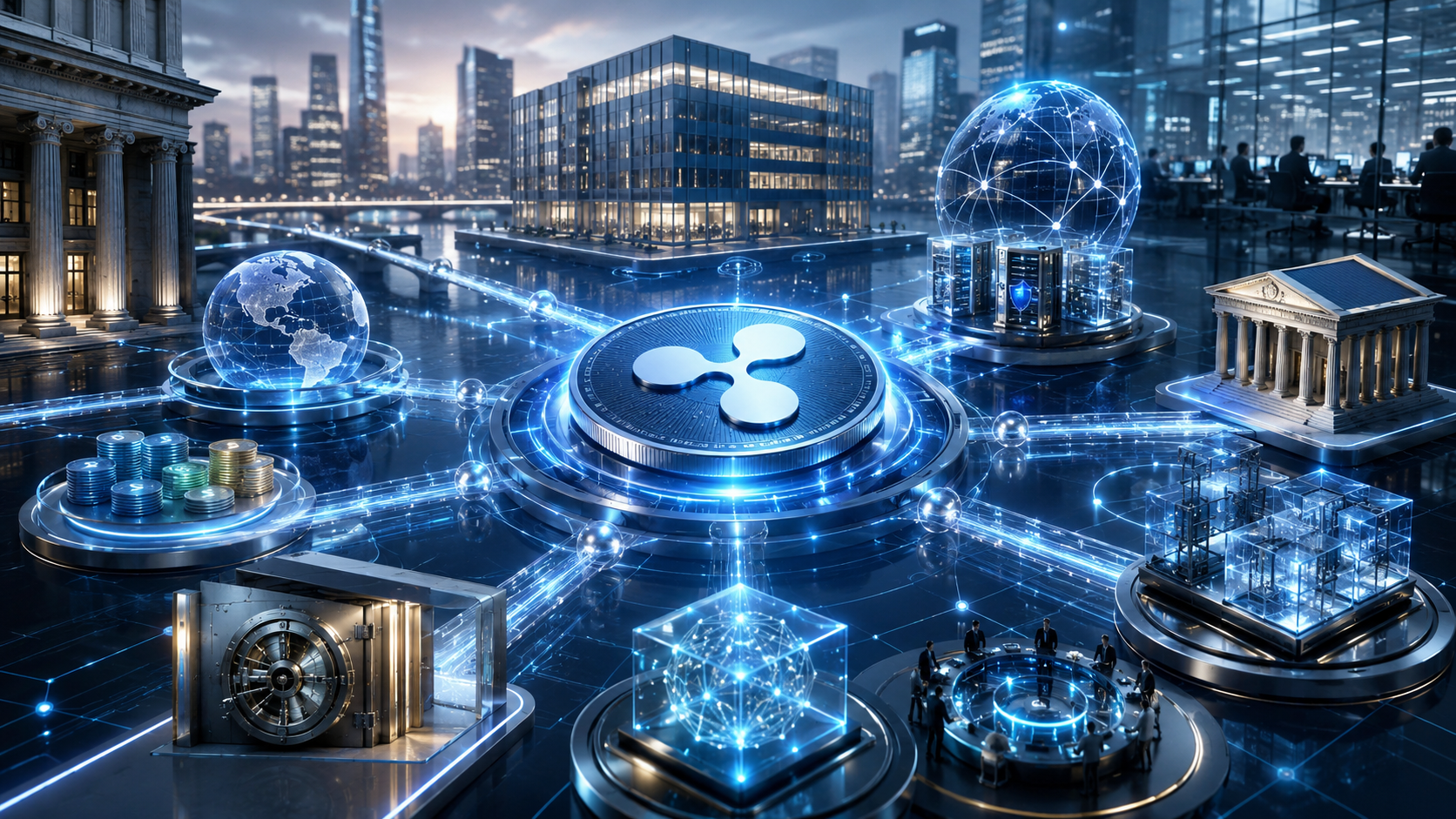
Ripple has been discussed for years, almost exclusively in the context of XRP. The token was the narrative; the court battles solidified that attention, and much of the market considered Ripple and XRP one and the same. That framing has been a long-term success, but it no longer reflects where the company seems to be going. Ripple is currently developing a more expansive financial infrastructure strategy that extends beyond a single token to other domains, such as prime brokerage, stablecoins, regulated finance, and institutional market plumbing.
That larger change is important, since interest in xrp inr continues to position Ripple as a token-first enterprise, whereas the company itself is becoming more like one poised to play a bigger role in digital finance. XRP continues to be significant to the Ripple ecosystem, but the company’s actual strategic bet at this point appears to be that it can serve as a more significant layer of infrastructure for payments, liquidity, and tokenized finance.
Ripple Is Moving From Token Story to Infrastructure Story
The most obvious indicator of this change is that Ripple does not act like a company whose future is based on XRP alone. Today, its approach resembles that of a financial tech firm attempting to lay long-term tracks for digital assets. That is a significant difference. A token may be volatile, emotional, and susceptible to evolving narratives. Infrastructure is different. Infrastructure is a recurrent utility, greater integration, and more users.
It seems Ripple is aware that the crypto market is maturing. Slogans are less important in institutions and more so in settlement, collateral, liquidity, custody, and controlled access. That will transform the type of company that will win in the next stage of the market. Instead of relying solely on the long-established payments story XRP tells, Ripple is developing the types of systems actually used in traditional finance.
This is an important development. It implies that Ripple no longer wants to be perceived as a company behind a token. It desires to be included in the operating framework of digital finance, per se.
RLUSD Gives Ripple a Different Kind of Leverage
Ripple’s stablecoin approach is another valuable dimension of this growth. With XRP and a stablecoin, various issues are resolved. XRP was historically linked with faster value transfer and cross-border settlement. In comparison, a stablecoin maintains a stable price and offers a more familiar unit for institutions that may not wish to have exposure to a volatile asset during normal financial operations.
Additionally, the difference is critical since not all players in digital finance desire the same thing. Others desire efficiency and speed. There are also those who desire predictability and more convenient accounting treatment. Ripple is establishing multiple entrances into its ecosystem by developing around both models.
This makes the company more flexible. If some customers are not interested in the direct use of XRP, Ripple can still provide them with infrastructure based on a stablecoin. That will help minimize reliance on a single story and increase the likelihood that Ripple will be useful regardless of changes in the instruments the market prefers.
Practically, it also indicates that Ripple is thinking less like a token promoter and more like a multi-product infrastructure business.
Ripple Wants to Fit Inside Regulated Finance
The other positive indicator is Ripple’s interest in working more closely with regulated financial structures. Unless they are serious about becoming legible to institutions and regulators, companies do not drift towards bank-like form, discipline in reserve management, and formal financial integration.
Moreover, this is important, as the future of crypto may reward companies that can operate within mainstream financial norms, not just beyond them. The initial crypto industry was one of unregulated speculation. Mature crypto will be different. It will be more based on trust, compliance, structured access, and institutional compatibility.
Ripple seems to be preparing itself for that environment. Rather than choosing between crypto-native relevance and regulated-finance credibility, it is attempting to create a bridge between the two. That provides it with over one strategic way ahead. Ripple gains with increased XRP usage. If stablecoins become more centralized, Ripple gains. Should tokenized finance and institutional market infrastructure become the new prize, Ripple would also like a slice of the cake.
XRP Still Matters, but It May Not Be the Whole Thesis Anymore
All this does not imply that XRP is not important anymore. It retains the market awareness, the historical brand, and much of the emotional and strategic weight of the Ripple brand. For most people, the first thing that comes to mind when the company’s name is mentioned is XRP.
But XRP may no longer be sufficient as the whole thesis. The recent course of Ripple suggests that the company believes in a future in which a single token is not enough to support a large financial business. Infrastructure, payments connectivity, collateral systems, regulated products and institutional access are more likely sources of scale.
It is an advanced stance than the market is at times recognizing. Instead of staying within the confines of a one-asset story, Ripple is expanding its ability to count. Ripple is attempting to be an expanded financial system in a market where most crypto companies remain largely reliant on a single-token narrative.
The Bigger Wager Is About Positioning
The actual bet that Ripple is making can be larger than XRP itself, since the company appears to think that the next stage of crypto will be taken over by companies that will not only become useful to institutions but also visible to traders. Prime brokerage, stablecoins, tokenized finance, and regulated infrastructure are all heading in the same direction. Ripple desires a role where real money flows and digital assets are used rather than being speculative.
Ultimately, it is the greater gamble. XRP continues to constitute a significant portion of the narrative; however, Ripple is positioning itself so that the burden does not fall on XRP in the future. When the company triumphs, it will not be a case of a single token taking the market. It will be because Ripple has developed sufficient infrastructure in digital finance to be hard to overlook, no matter what the story of the assets is.