Aave Risk Stewards Propose Higher USDC and USDe Caps on V3 Core
LlamaRisk asked to lift the USDC borrow cap to 2.75 billion as utilization hit 99%. The USDe supply cap increase would take that reserve to 750 million.



Key Takeaways
- USDC borrow cap utilization on Aave V3 Core reached 99.0%, at 2.57 billion of the 2.60 billion cap.
- LlamaRisk proposes raising the USDC borrow cap to 2.75 billion and the USDe supply cap to 750 million.
- The USDe supply cap is fully used at 550 million. These are steward recommendations, not live parameters yet.
Aave's risk stewards proposed raising two supply and borrow caps on Aave V3 Core after reserves neared their limits. LlamaRisk published the recommendation on November 8, and the changes are headed for implementation as parameter updates.
What LlamaRisk Proposed
USDC has reached 99.0% borrow cap utilization on Aave V3 Core, with 2.57 billion borrowed against a 2.60 billion cap. LlamaRisk recommends raising the Aave (AAVE) borrow cap to 2.75 billion, which would place utilization near 93.6% after the change.
USDe has reached 100.0% supply cap utilization at 550 million. The recommendation raises the supply cap to 750 million, or about 73.3% utilization after the change.
The proposal covers the Aave V3 Core market only.
What the Positions Look Like
The top 20 USDC borrowers run health factors between 1.02 and 3.07, with a median of 1.76. The largest borrower accounts for about 14% of outstanding debt. Collateral behind these positions is mainly ETH and BTC assets, including WETH, weETH, wstETH, cbBTC and WBTC.
On the USDe side, the top 20 suppliers hold about 99% of the supply, and the largest holds about 61%. Eighteen of the 20 carry debt, at a median health factor of 1.03.
How Aave Parameter Changes Work
Risk stewards like LlamaRisk publish recommendations based on user behavior, on-chain liquidity and position health in the protocol's governance forum. This one is a steward recommendation headed for implementation. It is not a token vote and the parameters are not live yet.
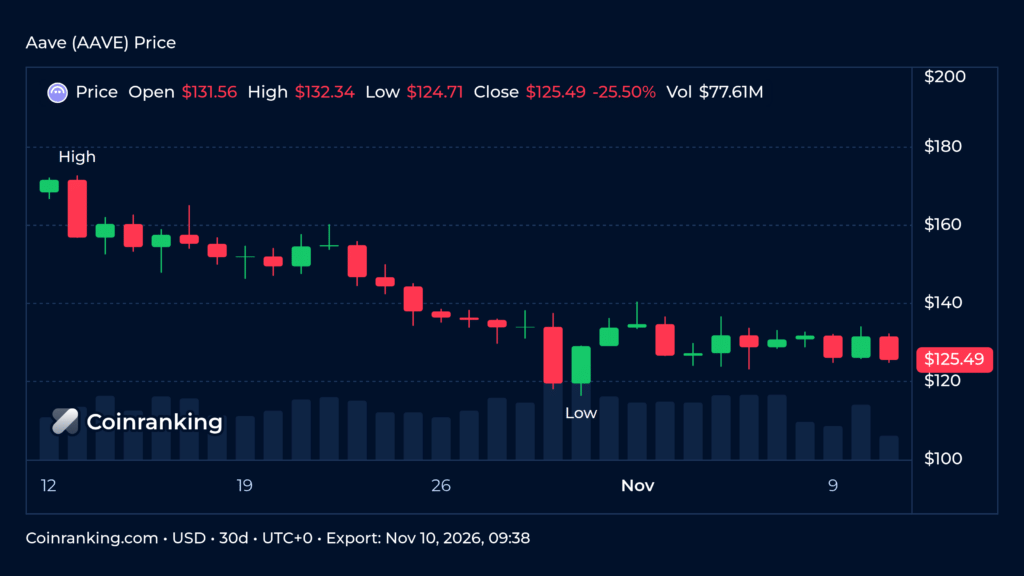
Aave is a decentralized, non-custodial lending protocol where lenders deposit assets and borrowers post collateral. Governance runs through the AAVE token and its DAO. ETHLend launched in 2017 and rebranded to Aave in 2020, according to Coinranking's Aave overview. The Aave price chart on Coinranking tracks the market.
Frequently Asked Questions
What Did Aave Risk Stewards Propose on November 8?
Raising the USDC borrow cap on Aave V3 Core from 2.60 billion to 2.75 billion and the USDe supply cap from 550 million to 750 million.
Why Does Aave Raise Supply and Borrow Caps?
Caps limit how much of each asset a market can hold or lend. Stewards raise them when utilization nears the limit and position health stays strong.
Are the New Aave Caps Live?
No. The November 8 note is a steward recommendation headed for implementation. The parameters are not live yet.
How Used Is the USDC Borrow Cap on Aave?
It reached 99.0% utilization, at 2.57 billion borrowed of the 2.60 billion cap.
What Is Aave?
Aave is a decentralized, non-custodial lending protocol where users lend assets to earn interest or borrow against collateral. It launched in 2020 after starting as ETHLend in 2017.
Sources
- Risk Stewards: Supply and Borrow Cap Increases on Aave V3 / 2026.11.08 · Aave governance (LlamaRisk)
Prices and market data: Coinranking.