Cardano’s Amaru Block-Producing Node Targets Mainnet Release on November 5
The Rust node has run as a mainnet relay for months, and block production is the last milestone before it can compete with the canonical Haskell node.



Key Takeaways
- Intersect's October 29 Hard Fork Working Group update lists the Amaru block producer for mainnet release on November 5, 2026.
- Amaru is a Cardano node written in Rust and maintained by PRAGMA, an association of Cardano ecosystem companies.
- The node already runs as a relay on Cardano mainnet and produces empty blocks on testnet.
- Stake pool operators would be able to choose between two independent block-producing programs.
The Cardano Amaru block-producing node is planned for mainnet release on November 5, 2026, according to Intersect's October 29 update. Amaru is a Cardano (ADA) node written in Rust, and the release would let stake pool operators produce blocks with it for the first time.
What Is the Amaru Node?
Amaru re-implements the full Cardano node in Rust: networking, ledger rules and consensus. It is maintained by PRAGMA, an association of Cardano ecosystem companies that includes the Cardano Foundation, Blink Labs, dcSpark, Sundae Labs and TxPipe, according to the Cardano glossary.
The node already runs as a relay on mainnet. It bootstraps from a Mithril snapshot, validates blocks and follows the chain tip, with weekly beta releases on GitHub. Block production is the next milestone, and Intersect's update notes the block producer was recently used for empty blocks on testnet. Intersect listed the November 5 target in the same update that shipped the node 11.2 pre-release for the Dijkstra testnet hard fork.
What Changes for Cardano on November 5?
Until now every Cardano block has been produced by the canonical Haskell node. From November 5, stake pool operators can choose between two independent programs. That gives the network client diversity at the block-producing level: a bug in one implementation leaves the other one running.
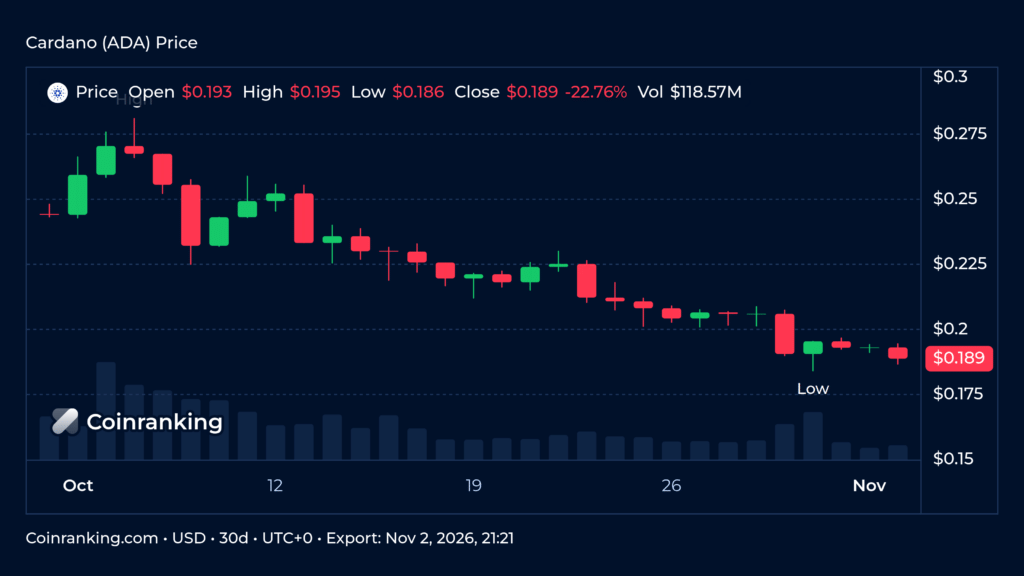
ADA holders do not need to do anything. Delegation, staking and wallets work the same whichever node a pool runs. Traders can follow the market reaction on the Cardano price chart.
What Comes Next for Amaru?
Amaru's roadmap continues with support for the Dijkstra era. The team also hosts a second Node Diversity Workshop in London on November 12-13, and Intersect is separately preparing node 11.3 with Leios.
The milestone matters for the Cardano ecosystem, where stake pools secure a proof-of-stake network. It also fits a wider pattern among layer 1 blockchains: networks avoid depending on a single node program.
Frequently Asked Questions
When Does the Amaru Block-Producing Node Go Live on Cardano Mainnet?
November 5, 2026, according to the timeline in Intersect's October 29 Hard Fork Working Group update.
What Is the Amaru Node?
Amaru is a Cardano node implementation written in Rust and maintained by PRAGMA. It is built to be a fully compatible alternative to the canonical Haskell node.
How Does Amaru Affect Cardano (ADA) Holders?
ADA holders do not need to change wallets or move funds. Stake pool operators pick the node software, and two independent options keep block production running if one program hits a bug.
Do Stake Pool Operators Need to Do Anything before November 5?
Operators who want to produce blocks with Amaru can install its weekly beta releases from the project's GitHub. Block production support is the milestone scheduled for November 5, 2026.
What Is Client Diversity on Cardano?
Client diversity means the network can run on more than one independent node program. Cardano's node has been written in Haskell, and Amaru adds a Rust implementation of the full node.
Sources
- Hard Fork Working Group update, October 29, 2026 · Intersect MBO
- Amaru | Cardano Glossary · Cardano Glossary
- Amaru weekly beta releases on GitHub · PRAGMA / Amaru releases
Prices and market data: Coinranking.